Chef of the Week Sponsored by Pure Ionic Water: Praveen Nayak, Executive Sous Chef at The Lalit
 Chef of the Week sponsored by Pure Ionic Water celebrates the chefs that embody Pure Ionic Water’s core philosophy of ‘enhancing the culinary experience‘.
Pure Ionic Water works in many kitchens up and down the country from the pinnacle of Michelin stars to 5-star hotels, uniting them all, the desire to serve the very best. Understanding the difference premium hydrogen enhanced alkaline water makes to food, to the kitchen team’s performance and ultimately to the business’s profits is easy, just ask around.
“I only trust Pure Ionic Water at home and in my restaurant.”
Sat Bains, Chef Parton, Restaurant Sat Bains, 2 Michelin stars
For more information about Pure Ionic Water CLICK HERE
How long have you worked at your current restaurant?
I have been working at The Lalit since February 2026. Before joining The Lalit, I worked at Brasserie Blanc under Chef Raymond Blanc for approximately 2.5 years.
Where did your passion for cooking come from and where did you learn your skills?
My passion for cooking comes from my roots in Rajasthan, where food is deeply connected to family, culture, tradition, and hospitality. Growing up surrounded by the rich flavours and culinary heritage of the region, I developed a natural curiosity about spices, traditional techniques, and the stories behind each dish.
What do you enjoy most about being a chef?
What I enjoy most about being a chef is bringing people together through food. I love taking traditional Indian flavours, especially those from my Rajasthani heritage, and giving them a modern touch. The creativity, teamwork, and opportunity to make people happy through food are what I find most rewarding.
Name three ingredients you couldn’t cook without.
If I had to choose three, they would be Chilli, Garlic and Coriander. They are at the heart of so many Indian dishes and bring warmth, depth, and character to my cooking.
Which piece of kitchen equipment couldn’t you live without?
I couldn’t live without my chef’s knife. It’s the most essential tool in my kitchen — from preparation to presentation, precision starts with a good knife.
What food trends are you spotting at the moment?
I’m seeing a growing interest in regional Indian cuisine, plant-based dishes, and modern takes on traditional recipes. Diners are looking for authentic flavours presented in a fresh, contemporary way — which is very close to my own style of cooking.
What do you think is a common mistake that lets chefs down?
I think one common mistake is overcomplicating a dish. Sometimes chefs try to do too much and lose the original flavour and identity of the food. Good cooking is about balance, simplicity, and letting quality ingredients speak for themselves.
What is your favourite time of year for food, and why?
My favourite time of year is winter, when you can enjoy rich, warming flavours and comforting dishes. I especially love using seasonal ingredients and bringing the bold, hearty flavours of Indian cuisine to the table.
Which of your dishes are you most proud of?
One dish I’m particularly proud of is Ker Sangri Ke Kofte. It has a special connection to my Rajasthani roots and the royal culinary tradition I experienced in Udaipur. It represents my passion for preserving heritage while giving traditional flavours a contemporary expression.
How do you come up with new dishes?
I start with a traditional flavour, ingredient, or memory and then explore how I can present it in a new way. I enjoy combining Indian flavours with modern techniques; while always making sure the original identity of the dish remains at the heart of it.
Who was your greatest influence?
My greatest influence has been the culinary heritage of Rajasthan and the chefs I have had the privilege to learn from throughout my career. My experiences in Udaipur and with the royal culinary tradition shaped my respect for authentic Indian flavours, while my international experience taught me precision and creativity.
Tell us three chefs you admire.
Three chefs I really admire are Raymond Blanc, Vikas Khanna and Ranveer Brar admire their creativity, discipline, and the way they have brought their culinary heritage and knowledge to a wider international audience.
What is your favourite cookbook?
Two books that I particularly admire are Prashad Cooking with Indian Masters by Jiggs Kalra and Rajasthan: An Oral History of Food and Culture by Tarla Dalal. I’m also currently writing my own book on Rajasthani cuisine, focusing on its rich heritage, traditional flavours, and culinary stories.
Who do you think are the chefs to watch over the next few months?
I think the chefs to watch are those who are celebrating their roots while pushing cuisine forward. There is a lot of exciting talent emerging from India and the UK, particularly chefs bringing regional Indian flavours into modern fine dining. It’s an exciting time for Indian cuisine globally.
What’s been your favourite new restaurant opening of the last year?
One of my favourite recent openings is Trèsind London. I admire how it takes Indian cuisine in a bold, contemporary direction while respecting its traditional flavours and identity. The creativity, technique, and attention to detail really stand out.
Chef of the Week Sponsored by Pure Ionic Water: Chris Alexander, Regional Executive Chef at Restaurant Associates
Chef of the Week sponsored by Pure Ionic Water celebrates the chefs that embody Pure Ionic Water’s core philosophy of ‘enhancing the culinary experience‘.
Pure Ionic Water works in many kitchens up and down the country from the pinnacle of Michelin stars to 5-star hotels, uniting them all, the desire to serve the very best. Understanding the difference premium hydrogen enhanced alkaline water makes to food, to the kitchen team’s performance and ultimately to the business’s profits is easy, just ask around.
“I only trust Pure Ionic Water at home and in my restaurant.”
Sat Bains, Chef Parton, Restaurant Sat Bains, 2 Michelin stars
For more information about Pure Ionic Water CLICK HERE
How long have you worked at your current restaurant?
Five years.
Where did your passion for cooking come from and where did you learn your skills?
My passion for cooking came from my family. I have fond memories of watching my grandparents grow their own vegetables on their allotments. The idea of picking fresh produce and turning it into a meal really fascinated me, and I think that’s where it all began.
I developed my skills working in high-end, award-winning restaurants and hotels. I’ve also completed stages in several one and two Michelin-starred restaurants that I greatly admire, and I intend to continue doing so throughout my career.
What do you enjoy most about being a chef?
What I love most about being a chef is the creativity, discovering great produce and working with fantastic suppliers, and developing new dishes with the team. Above all, I love that there is always something new to learn, whether that’s a new technique, ingredient or way of doing things.
I also really enjoy teaching and supporting the next generation of chefs, passing on the knowledge and experience I have gained throughout my career and training. I feel this is incredibly important, as it allows us to share our knowledge, help others develop their skills and continue to inspire the future of our industry.
Name three ingredients you couldn’t cook without.
Garlic, onion and salt.
Which piece of kitchen equipment couldn’t you live without?
My Japanese knife.
What food trends are you spotting at the moment?
The biggest focus right now is sustainability – minimising waste, using responsibly sourced produce and creating dishes with a lower carbon footprint. I think that’s a positive direction for the industry.
What do you think is a common mistake that lets chefs down?
Trying to rush the journey. Everyone wants to progress quickly, but there’s no substitute for experience. Spend time learning from great chefs, work with the best ingredients you can, and never stop asking questions. Those lessons will stay with you throughout your career.
What is your favourite time of year for food, and why?
Spring is my favourite season. It brings incredible produce and is a fantastic time for foraging. The dishes become lighter while still delivering bold, vibrant flavours.
Which of your dishes are you most proud of?
Hand-dived Cornish scallops, Cornish mussels, salsify, caviar, dill, mussel & chive cream. A dish built around the whole ingredient, celebrating the incredible produce from our Cornish waters while making sure nothing goes to waste. Simple, refined and driven by sustainability — 100% no waste.
How do you come up with new dishes?
I like taking inspiration from classic dishes and giving them a modern twist while incorporating current trends. My style is always evolving, and I believe every new dish is a team effort. We start with an idea in the kitchen, and it develops naturally through collaboration.
Who was your greatest influence?
Throughout my career, I have been fortunate to have had some great influences, and each of them has played a part in shaping the chef I am today. I believe you take a little something from everyone who inspires you, and that this is something that never stops.
From famous chefs such as Gordon Ramsay, Thomas Keller and Michel Roux to the chefs and colleagues you work alongside every day, there is always something new to learn. Every experience, every kitchen and every person you work with can influence and inspire you, helping you to continually develop and grow as a chef.
Tell us three chefs you admire.
Gareth Ward, Thomas Keller and Douglas McMaster
What is your favourite cookbook?
Noma Guide to Fermentation or Fäviken.
What’s been your favourite new restaurant opening of the last year?
Trillium Restaurant, Glynn Purnell and Phil Innes.
Qualiko Chicken Feast Showcases Versatility, Quality & Scale at Brilliant Gastro
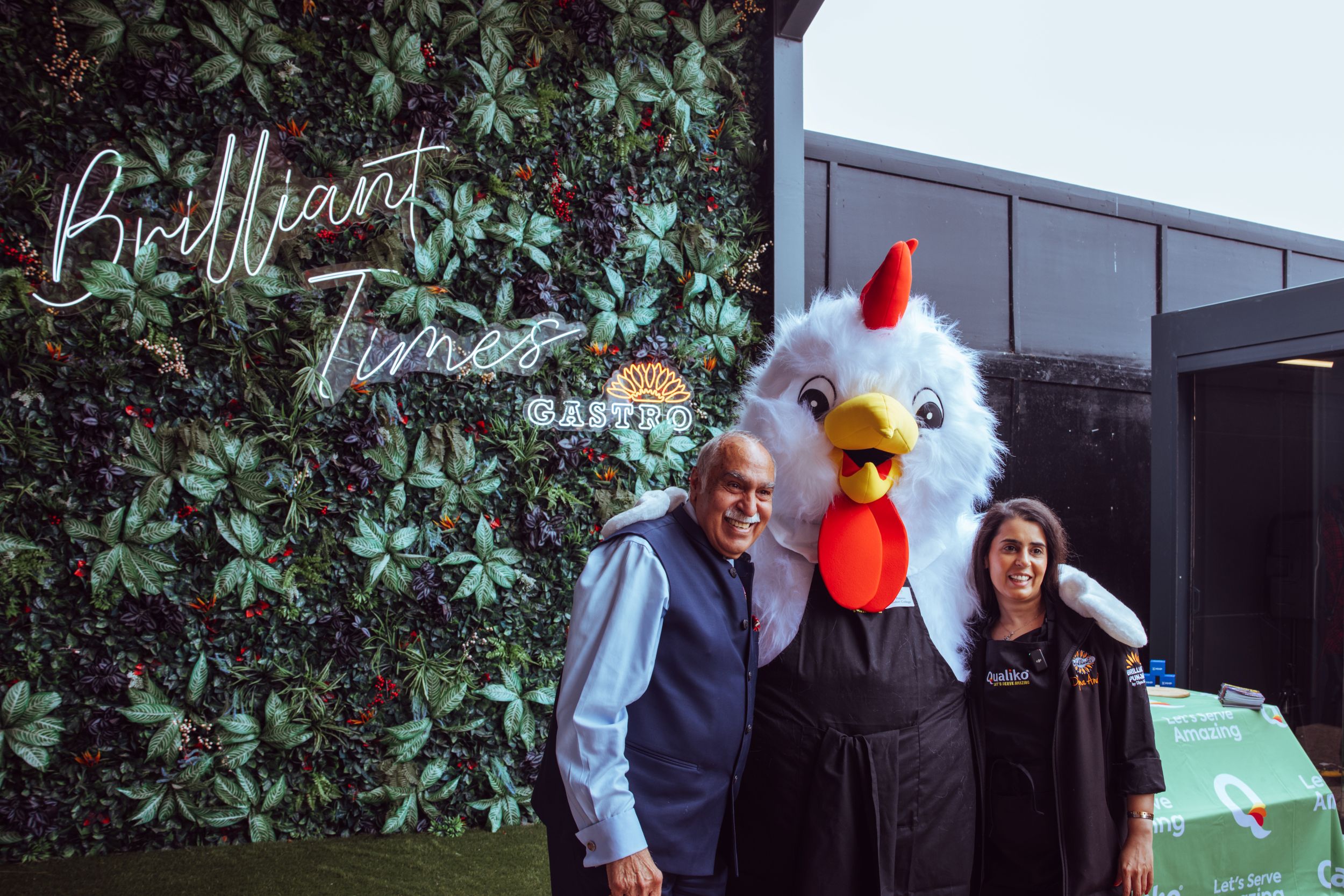 Dipna Anand and her father Gulu put the Qualiko range through its paces at a special Chicken Feast at Brilliant Gastro in Southall, demonstrating how the products can perform across restaurant, contract catering, stadia, street-food and grab-and-go operations.
 Qualiko Chicken took centre stage in the purpose-built pergola at Brilliant Gastro by Dipna Anand in Southall on Monday 7 September, as chefs, buyers, butchers and foodservice professionals gathered for a special Qualiko Chicken Feast to showcase the range’s quality, versatility and operational benefits.
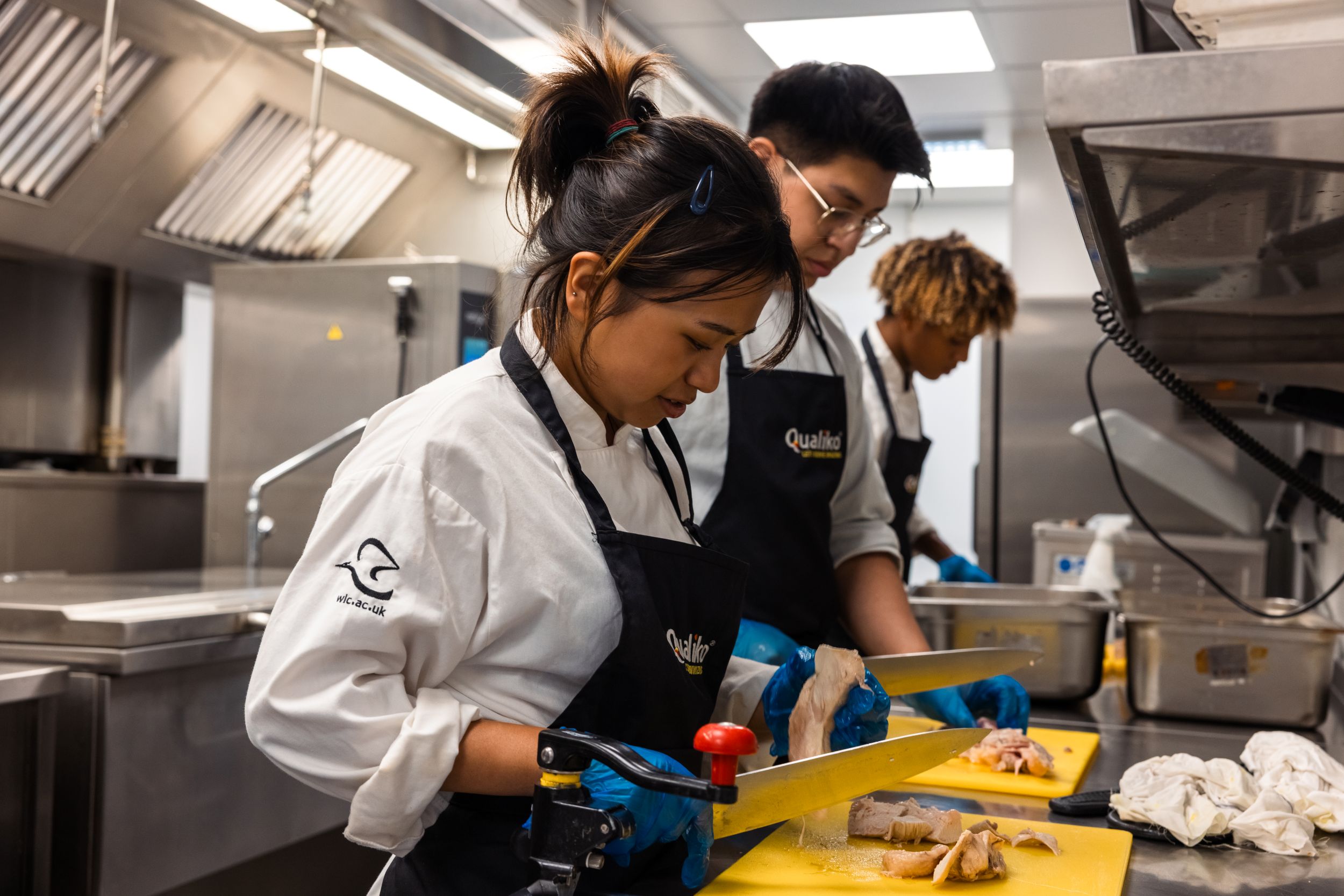
Hosted by celebrated chef Dipna Anand and her father Gulu Anand, the event saw Qualiko products transformed into a vibrant selection of dishes inspired by the flavours of the Brilliant kitchen, ably assisted by Level 2 hospitality and catering students from West London College.
Guests were welcomed with chicken canapés before sitting down to a tasting menu featuring hand-folded chicken samosas with mint chutney, tandoori chicken with tamarind chutney and masala fries, achari chicken tikka with kachumber salad, dynamite wings, butter chicken with pilau rice and shawarma on naan, followed by gulab jamun with pistachio.
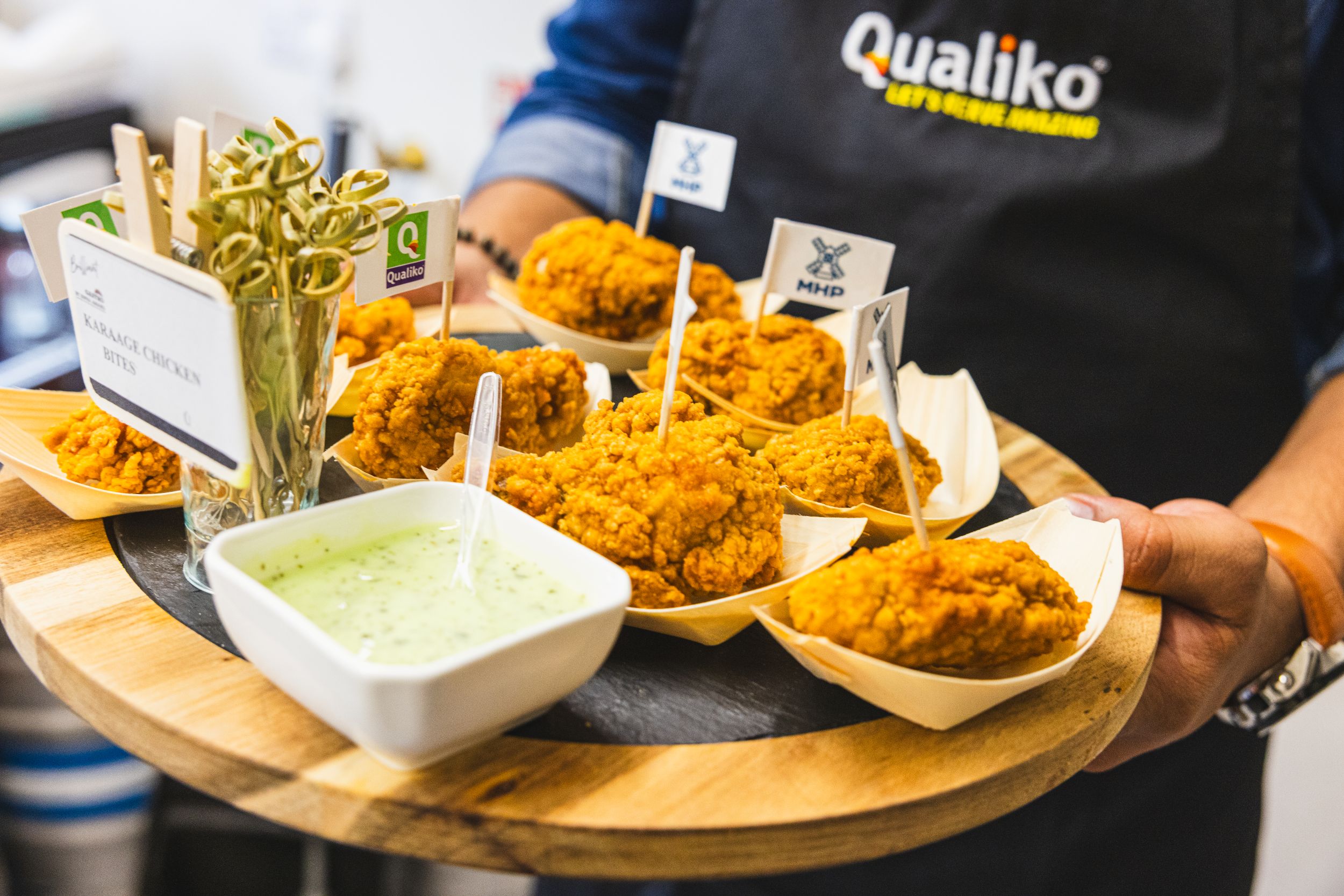 The dishes demonstrated the breadth of the Qualiko portfolio, using products including steamed cooked skinless boneless thigh meat, shawarma boneless thigh meat, oyster thigh meat, steamed wings, cooked chicken breast fillets and frozen shredded shawarma.
 For Dipna and Gulu, however, the exercise went considerably further than simply creating a great-tasting menu. The pair assessed the products through the eyes of experienced high-volume foodservice operators.
Today, the Brilliant business extends far beyond its restaurant operations. Through its collaboration with Compass Group, Brilliant dishes are served at major sporting and entertainment venues, including Chelsea Football Club, Brentford FC, The Kia Oval, Allianz Stadium Twickenham, Harlequins, Edgbaston and The O2.
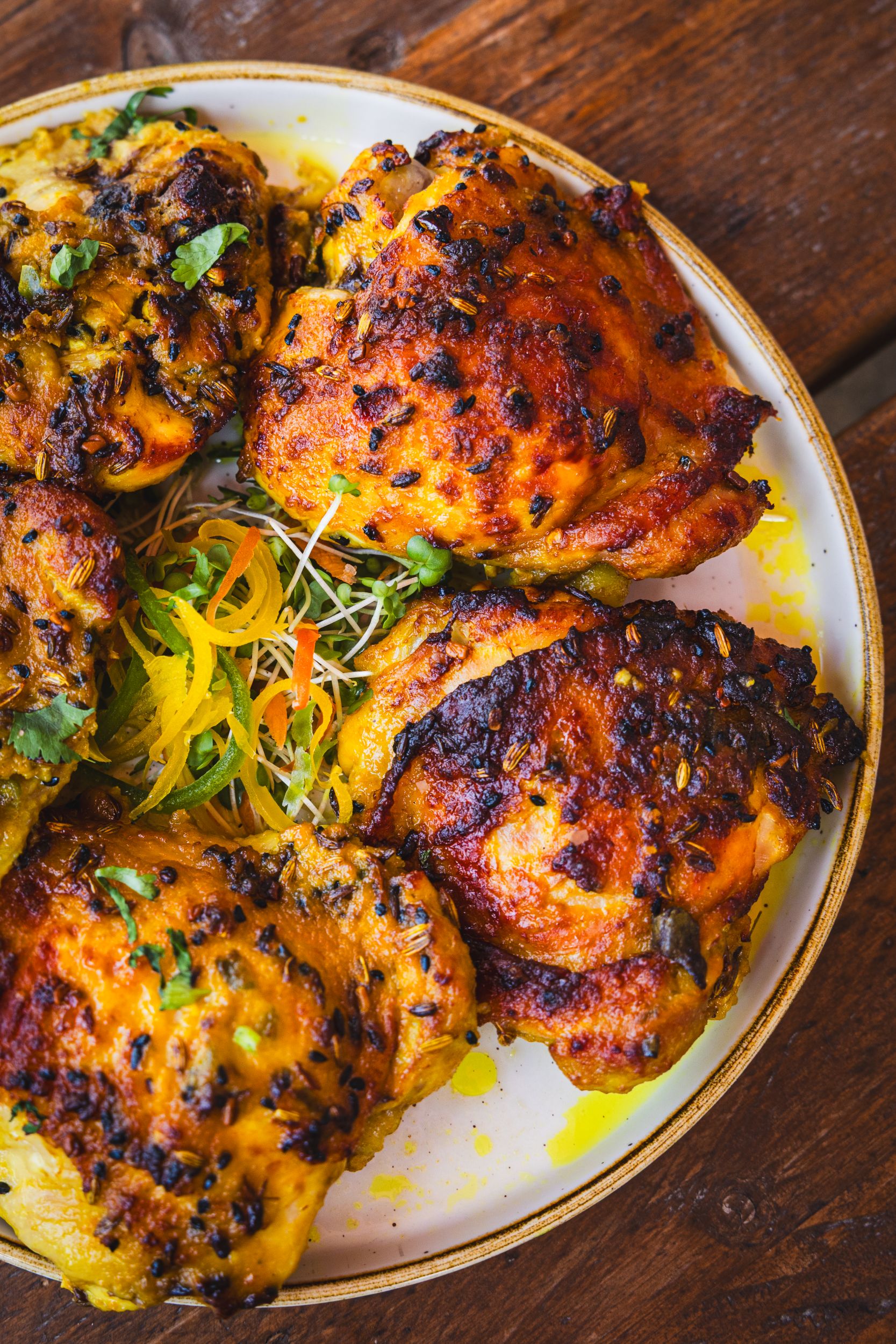 That makes consistency, speed of service, labour efficiency, portion control and the ability to scale recipes particularly important – precisely the areas in which prepared and portioned chicken products can offer significant operational advantages.
 Dipna said:
“Dad and I were genuinely impressed by how well the Qualiko products performed across the dishes. In our business, flavour will always come first, but when we’re producing food at scale in our CPU, we also need consistency, reliability and products that help our chefs work efficiently. Whether we’re cooking for the restaurant, our delivery business or large-volume stadia catering, we need to know we can reproduce the same quality time after time. The Qualiko range gives chefs a versatile starting point while still allowing us to put our own Brilliant flavours and identity into the finished dish.”
The products also demonstrated considerable potential for the Asian foodservice market, where chicken remains an extraordinarily versatile menu ingredient. From tikka, butter chicken and samosas to shawarma, loaded naan breads, wings and handheld dishes, the range lends itself particularly well to contemporary street-food, food-to-go and stadium concepts.
For Gulu Anand, whose hospitality career spans decades, commercial practicality remains as important as flavour.
Gulu said:
“When you have spent your life in restaurants and catering, you know that a product has to work in the kitchen as well as taste good on the plate. You need consistency, you need to control waste, and you need something chefs can work with quickly when the kitchen gets busy. I liked the quality of the Qualiko chicken, and, importantly, it took our marinades and spices extremely well. That makes it very useful for Indian and Asian cooking, where the chicken needs to carry flavour.”
From Brilliant Restaurant to Brilliant Gastro
The setting for the event brought its own remarkable foodservice heritage.
 The Brilliant story began in Nairobi in the 1950s, when Bishen Dass Anand founded the original Brilliant Restaurant, blending Punjabi culinary traditions with East African influences. After the family relocated to Britain, his sons, Kewal and Gulu Anand, opened Brilliant Restaurant on Western Road in Southall in 1975.
What began as a small restaurant grew dramatically over the following five decades, becoming a Southall institution with a large restaurant, a banqueting operation and a cookery school. Its reputation spread far beyond West London, with the restaurant featured on Gordon Ramsay’s Ramsay’s Best Restaurant and attracting a distinguished clientele.
After 50 years, the original restaurant closed in April 2025, and the family embarked on its next chapter: Brilliant Gastro by Dipna Anand at Parkside Yards in Southall’s Green Quarter. The new concept blends the Anand family’s Punjabi heritage with a contemporary gastropub format.
That evolution also reflects how dramatically the wider Brilliant business has changed. Restaurant dining now sits alongside outside catering, retail, delivery and high-volume foodservice, making the new Southall operation an ideal environment in which to test products intended for professional kitchens.
A showcase for modern foodservice
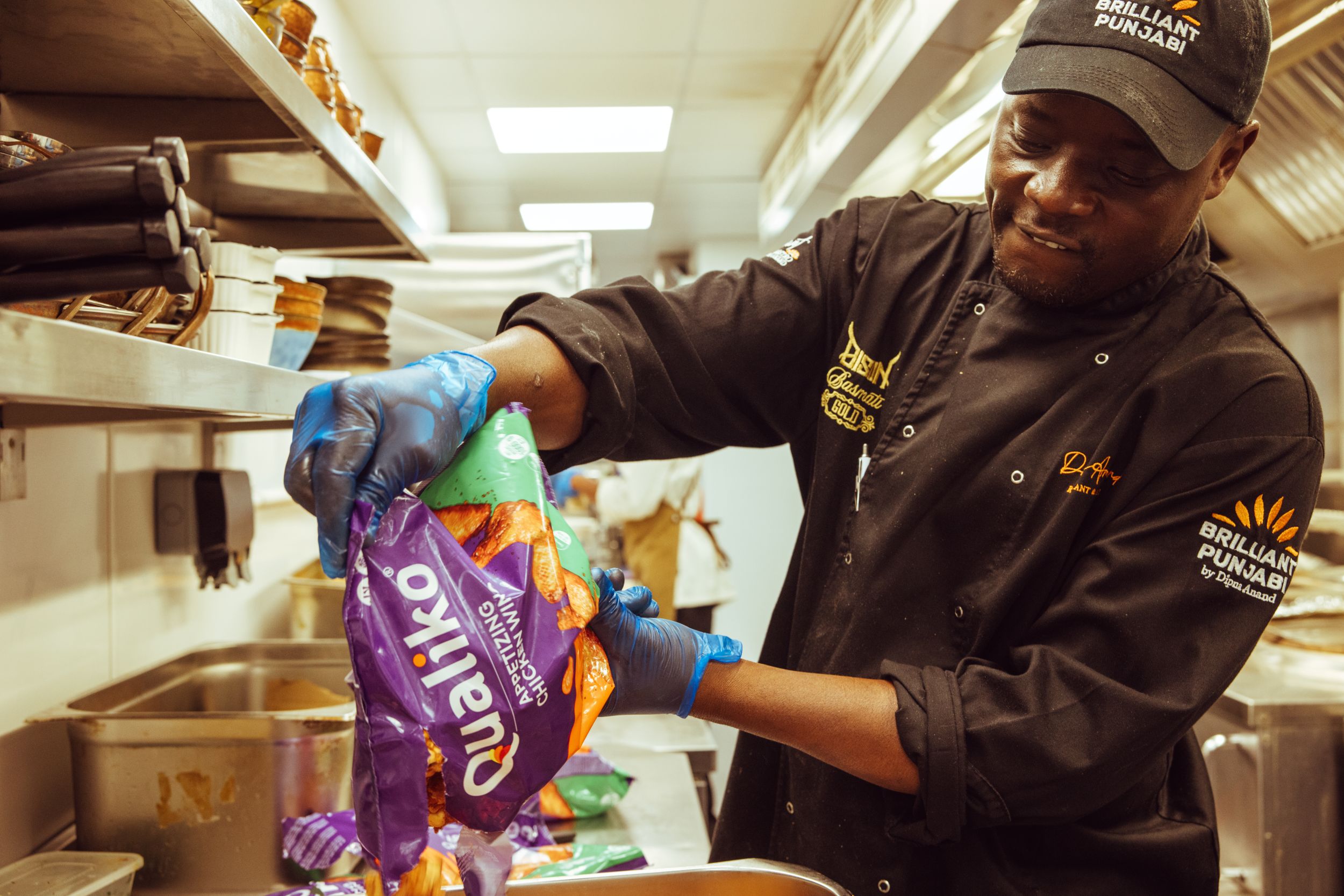
The Qualiko Chicken Feast also demonstrated Brilliant Gastro’s potential as a food-industry event and development venue.
With professional kitchen facilities alongside restaurant and event space, the Southall site provides an environment in which manufacturers and suppliers can put products directly into chefs’ hands and demonstrate their performance in commercially relevant dishes.
For the global poultry business MHP Foods, the event provided an opportunity to showcase the Qualiko range not merely as chicken products, but as ingredients that support a range of foodservice formats and cuisines.
The menu was illustrated particularly effectively. One range moved from Indian restaurant classics such as butter chicken and Achari tikka to dynamite wings and shawarma naan – exactly the sort of cross-cultural menu development increasingly seen in stadia, QSR, street-food and grab-and-go environments.
 For operators producing hundreds or thousands of portions, that flexibility matters. Products that reduce preparation while delivering predictable yield and consistency can allow development chefs to focus their time on seasoning, sauces, presentation and the final customer experience.
And judging by the response at the Qualiko Chicken Feast, Dipna and Dad certainly found plenty of inspiration for what to do with them and are looking forward to organising supply.
To find out more information or talk to one of the Qualiko team, please email: sales@mhpfood.co.uk
Photography & film by Carlos Farinha @carlosclickuk
Edition Three of The Healthcare Chefs’ Knowledge Launch Celebrates Provenance, Seasonality and the Future of Hospital Food
 The third edition of The Healthcare Chefs’ Knowledge has officially launched, bringing together leading figures from healthcare catering, nutrition, procurement, sustainability and the wider foodservice industry to celebrate the people and ideas driving positive change across hospital food.
The latest book, The Healthcare Chefs’ Knowledge 3: Provenance & Seasonality – From Research to Practice, was unveiled at a special industry event at Capital City College Group in London’s Westminster, marking the third consecutive year of the publication and firmly establishing its launch as an annual fixture in the healthcare foodservice calendar.
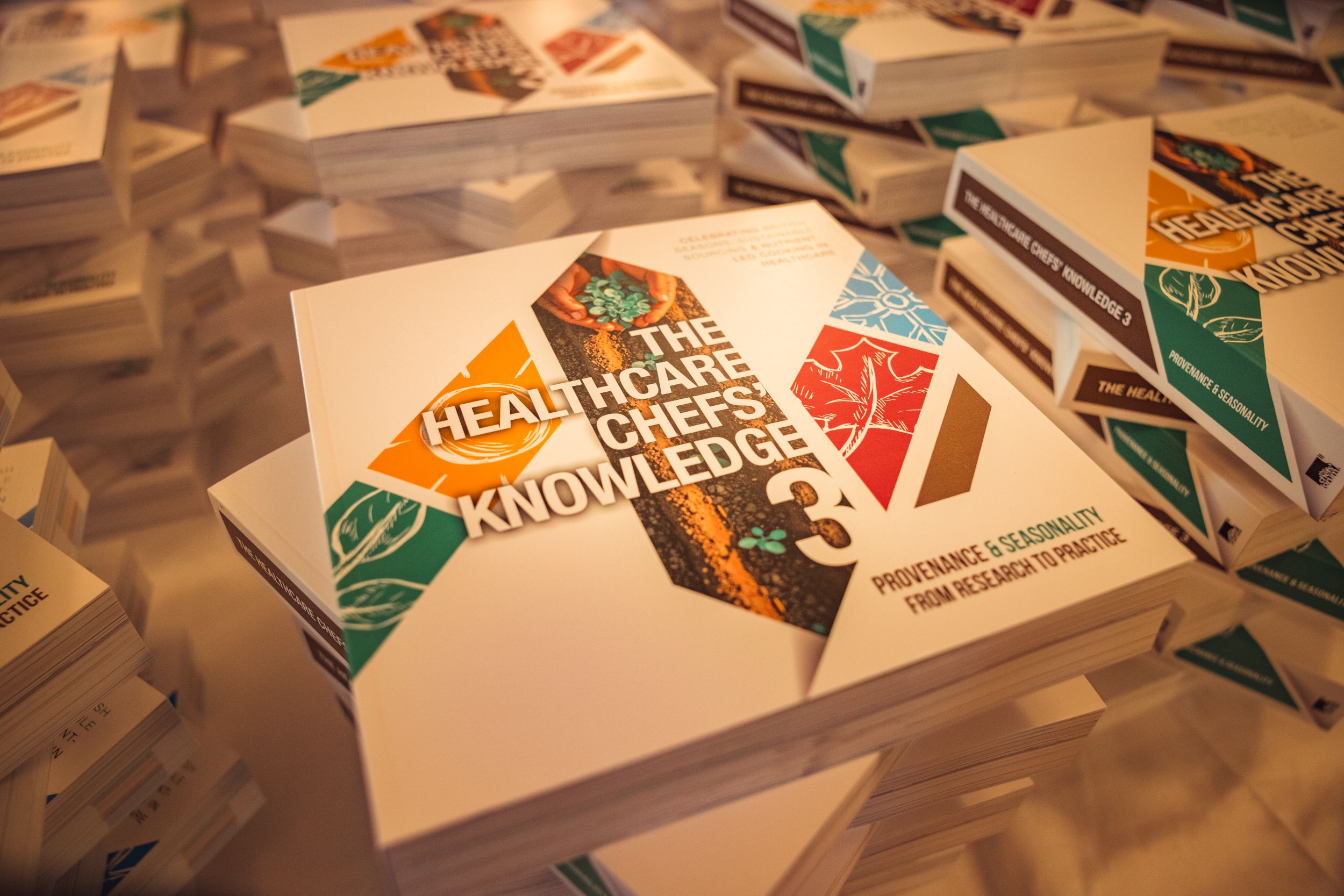 Edited and published by Catherine Farinha, Founder of The Chefs’ Forum, the new edition explores how provenance and seasonality can support better nutrition, more sustainable procurement, reduced food waste and, ultimately, a better food experience for patients.
The launch brought together healthcare chefs, dietitians, nutrition specialists, procurement professionals, educators, suppliers, sustainability Experts and industry leaders for an afternoon of food, discussion and knowledge sharing.
From Research to Practice
A central feature of the event was a thought-provoking panel, hosted by the book’s editor and publisher, Catherine Farinha, which explored some of the key themes covered in the book, drawing on face-to-face interviews with key changemakers featured in the book and with suppliers and stakeholders across Healthcare Foodservice nationwide.
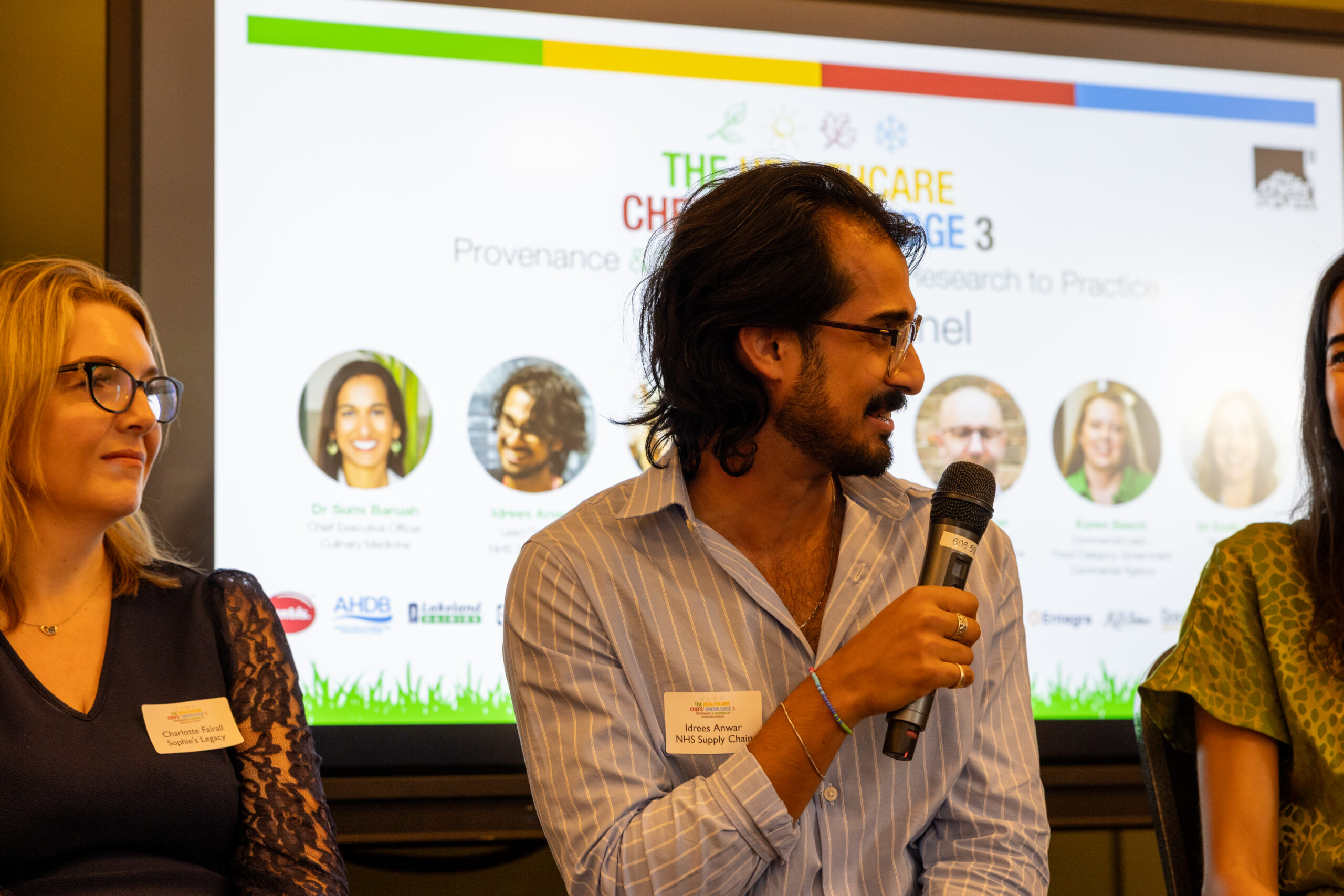
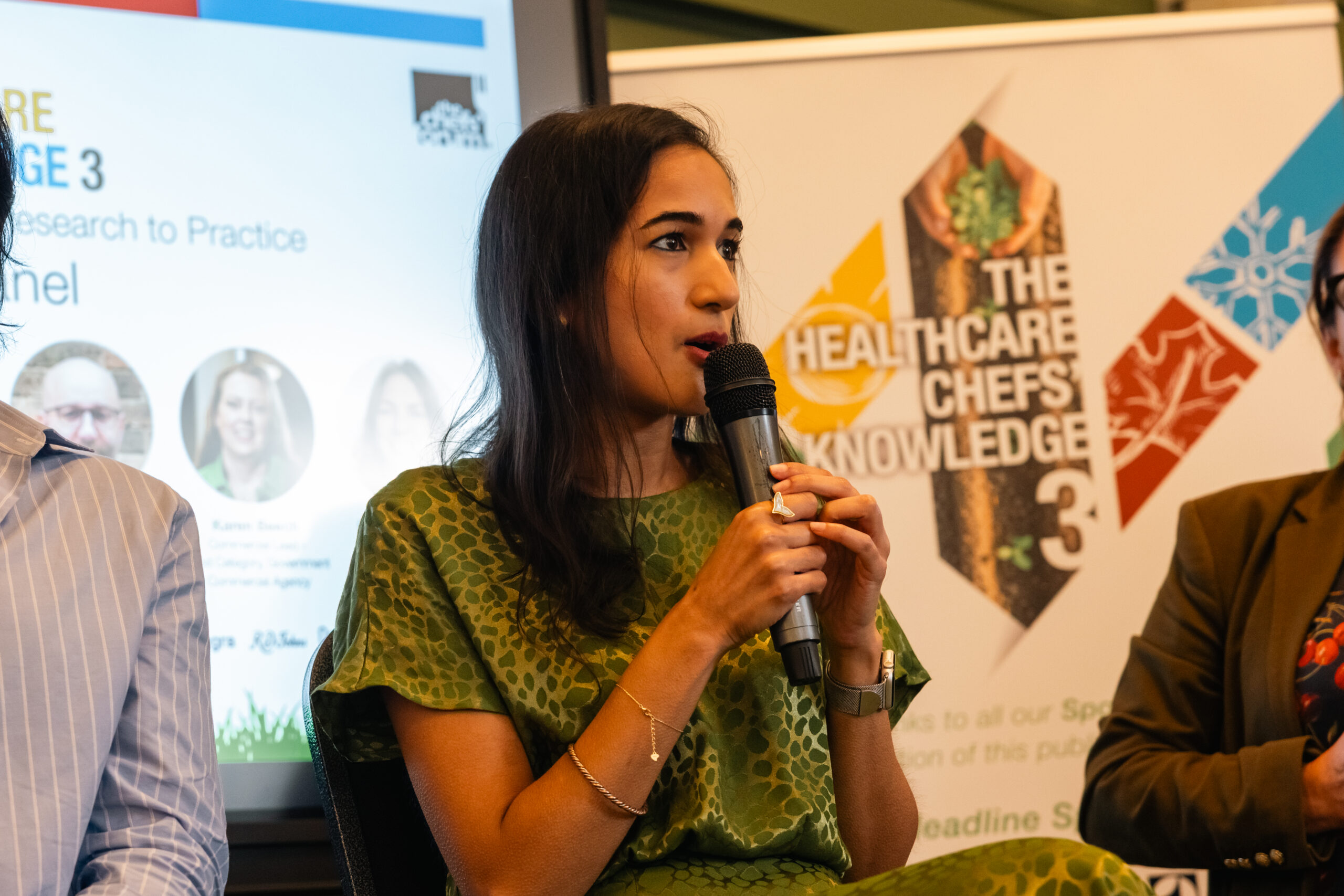 Dr Sumi Baruah and Idrees Anwar of Culinary Medicine discussed the increasingly important relationship between nutrition, medicine and patient outcomes, examining how chefs, clinical teams and food producers can work more closely together, and the role that food can play in a patient’s wider care and recovery.
The conversation also explored the importance of making nutritious food appealing and accessible, particularly for patients whose appetite, medical condition or treatment may make eating difficult.
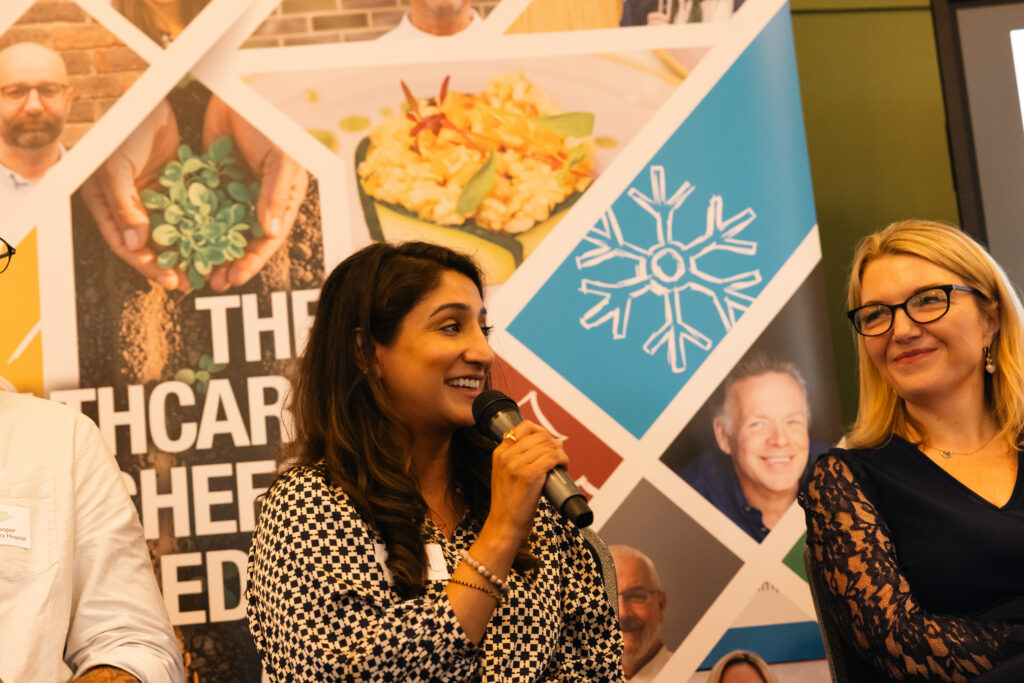
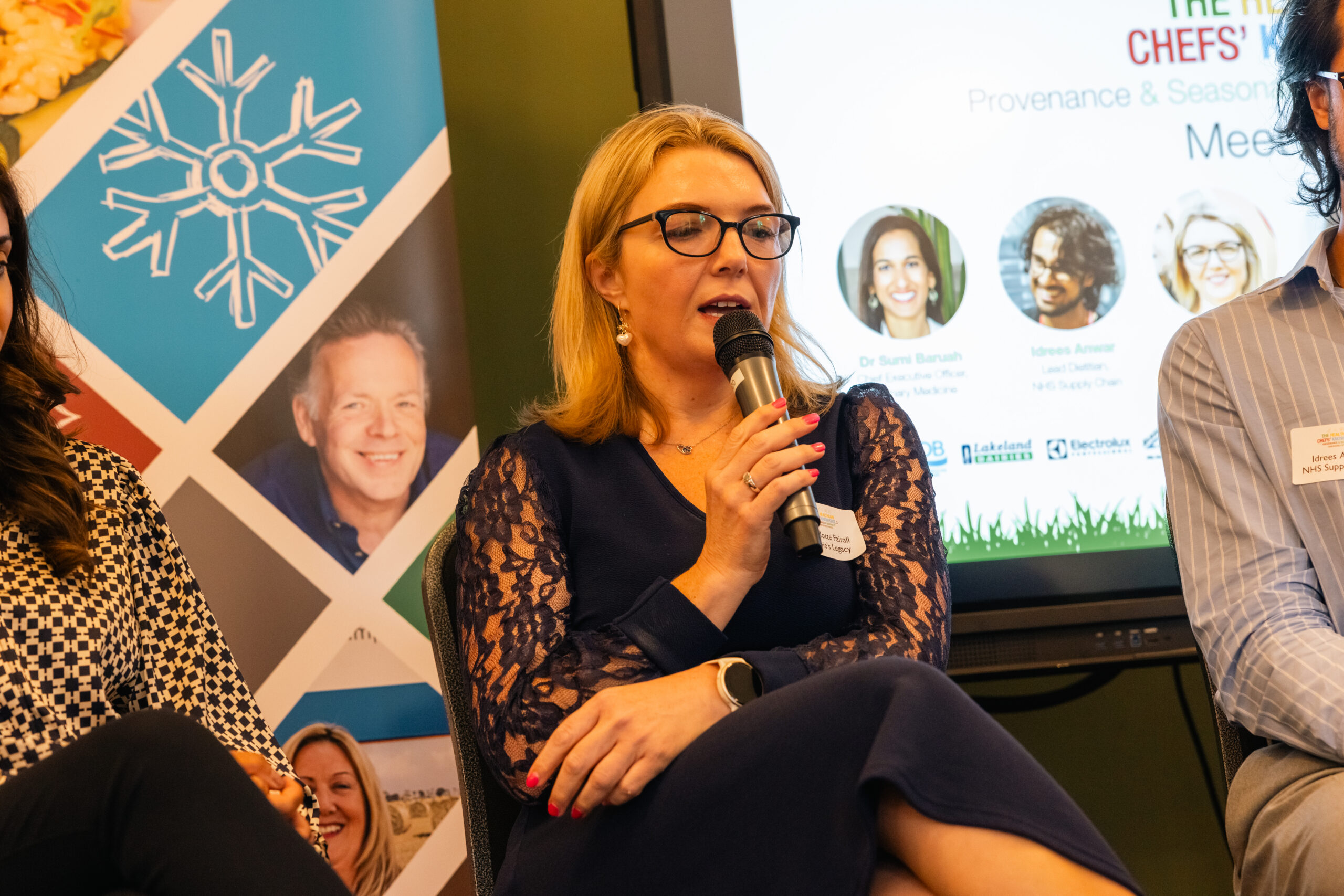 Charlotte Fairall of Sophie’s Legacy and Annu Sharma of Mitie discussed the innovative paediatric snack trolley initiative at the John Radcliffe Hospital, highlighting the importance of listening to children and families and finding practical ways to improve the hospital food experience. The initiative has shown that relatively simple interventions can make a meaningful difference and has provided valuable learning as the concept is developed across additional Mitie sites.
 Tom Cooper, Catering Manager at Dorset County Hospital brings a strong combination of academic business and management expertise and lived operational experience to his role at Dorset County Hospital. Having previously worked within a nose-to-tail pub operation, Tom understands first-hand the importance of extracting maximum value from ingredients, controlling waste, managing margins and creating an offer that customers genuinely want to buy.
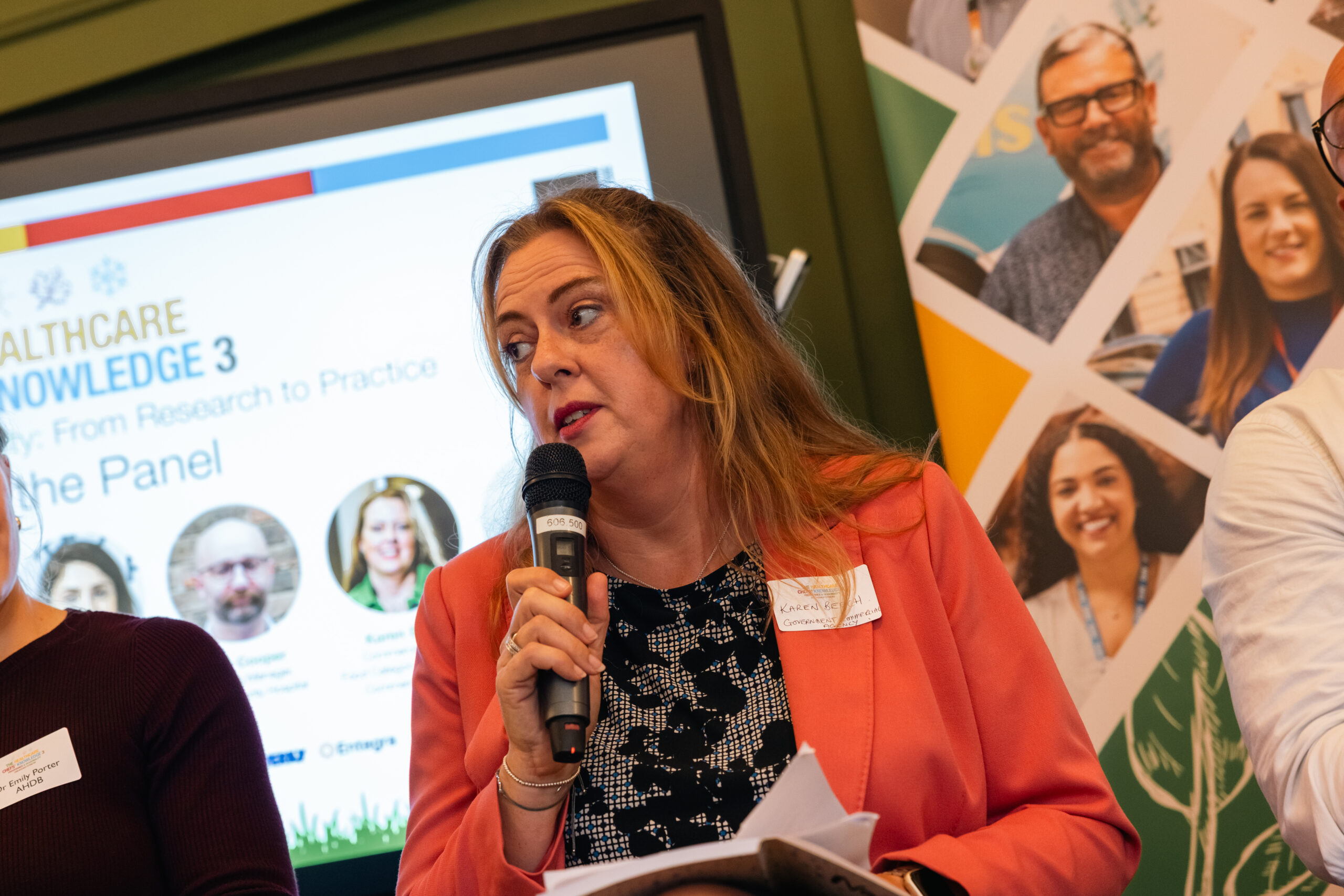 Karen Beech, Category Lead for Food & Drink at Government Commercial Agency, brought a procurement perspective to the discussion, promoting the leading procurement platform, Entegra, and examining how purchasing decisions made long before ingredients reach the hospital kitchen can influence seasonality, menu quality, availability, sustainability and food waste.
The panel considered how greater visibility into seasonal availability and supply-chain conditions can enable catering teams to plan rather than react, while closer collaboration among chefs, procurement teams and suppliers can help build more resilient menus.
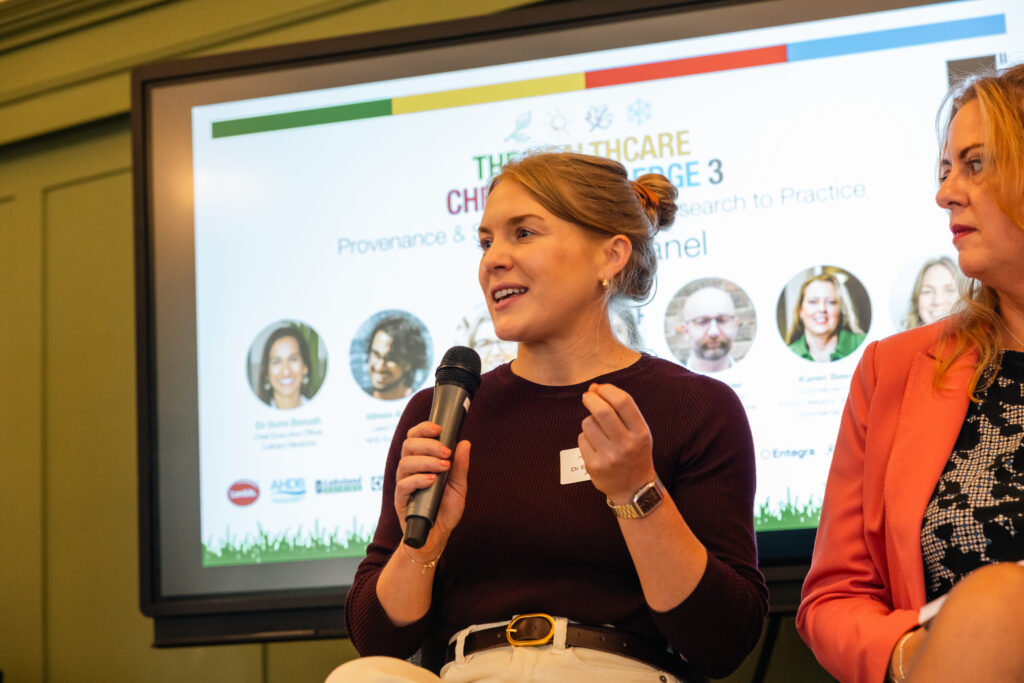 Dr Emily Porter, Senior Dietitian at AHDB concluded the panel discussion by highlighting the importance of British food production and provenance, and of helping chefs understand the story behind the ingredients they use. The discussion emphasised the opportunity for healthcare catering to strengthen connections between British farmers, food producers and hospital kitchens, while ensuring that nutrition, value and sustainability remain at the heart of menu planning.
One of the valuable resources highlighted during the panel was AHDB’s FREE Sustainable Diets: From Farm to Fork e-learning course, developed in collaboration with the British Nutrition Foundation and Harper Adams University.
The AfN CPD-endorsed course comprises eight modules and around 10 hours of learning, with contributions from global experts across 22 organisations. It explores global and local food systems, nutritionally adequate sustainable diets, UK farming systems, food waste and why we need to look beyond carbon calculators when assessing sustainability.
Access the free Sustainable Diets e-learning course:
Sustainable diets: from Farm to Fork by British Nutrition Foundation on cademy.io
Together, the panellists reinforced one of the central messages of the new book: meaningful change occurs when chefs, clinicians, dietitians, procurement teams, suppliers and patients collaborate rather than working in isolation or silos.
A Lunch Menu Brought to Life from the Book
Guests were also able to experience the book in the best possible way – by tasting it.
Vince Kelly, Head of Culinary Arts, and Chef Joseph Sullivan led the students in preparing a delicious canapé menu inspired by Culinary Medicine.
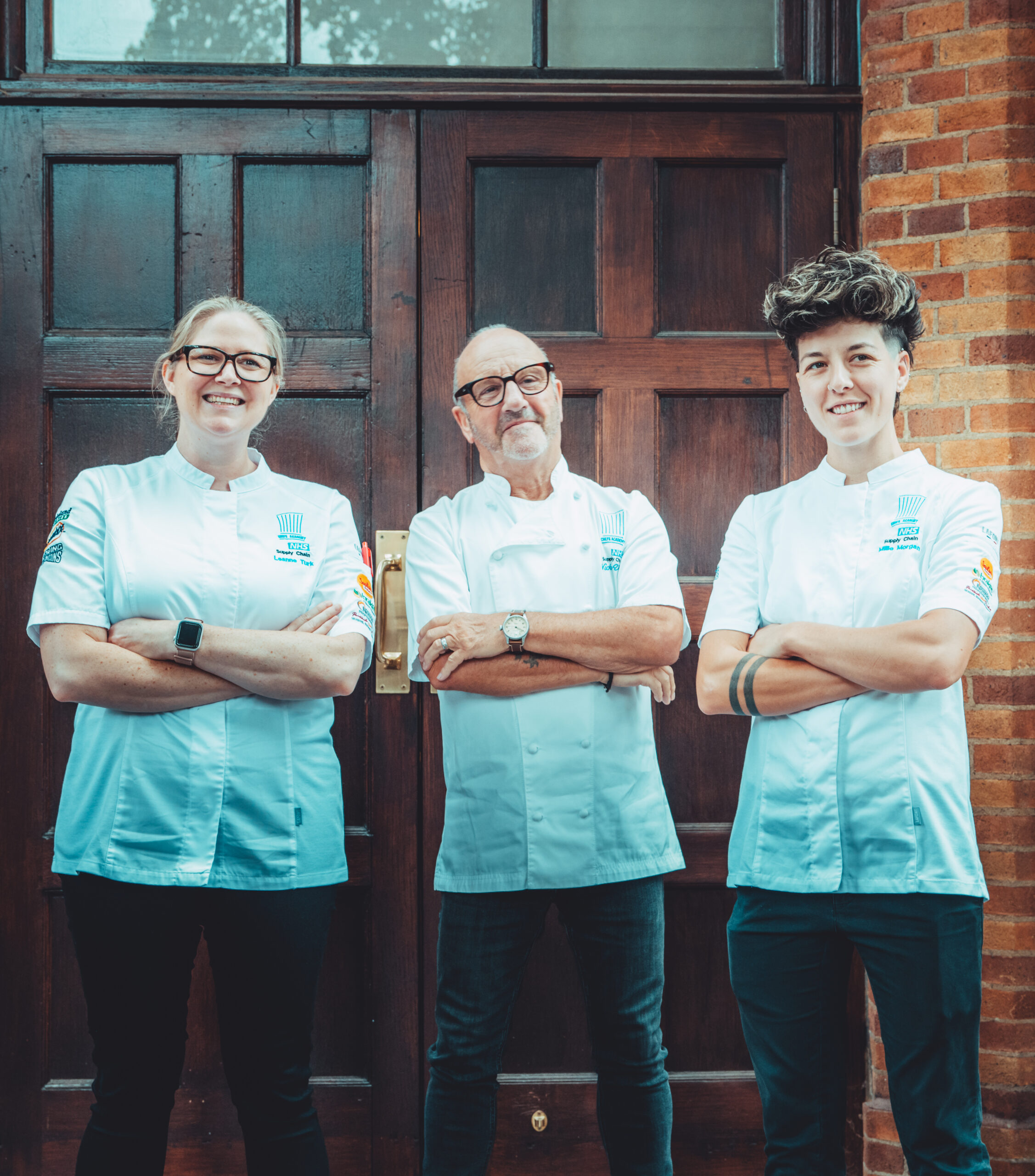 Nick Vadis, Leanne Turk and Millie Morgan from Foodbuy Group and NHS Supply Chain created a fantastic menu featuring dishes from The Healthcare Chefs’ Knowledge, bringing the recipes and principles explored throughout the publication to life. All ingredients were kindly sponsored by RD Johns, Kwerky, First Choice Produce and NH Case.
The menu demonstrated how provenance, seasonality, nutrition and great cooking can work together, showing that food developed for healthcare environments can be both nutritionally appropriate and genuinely enjoyable.
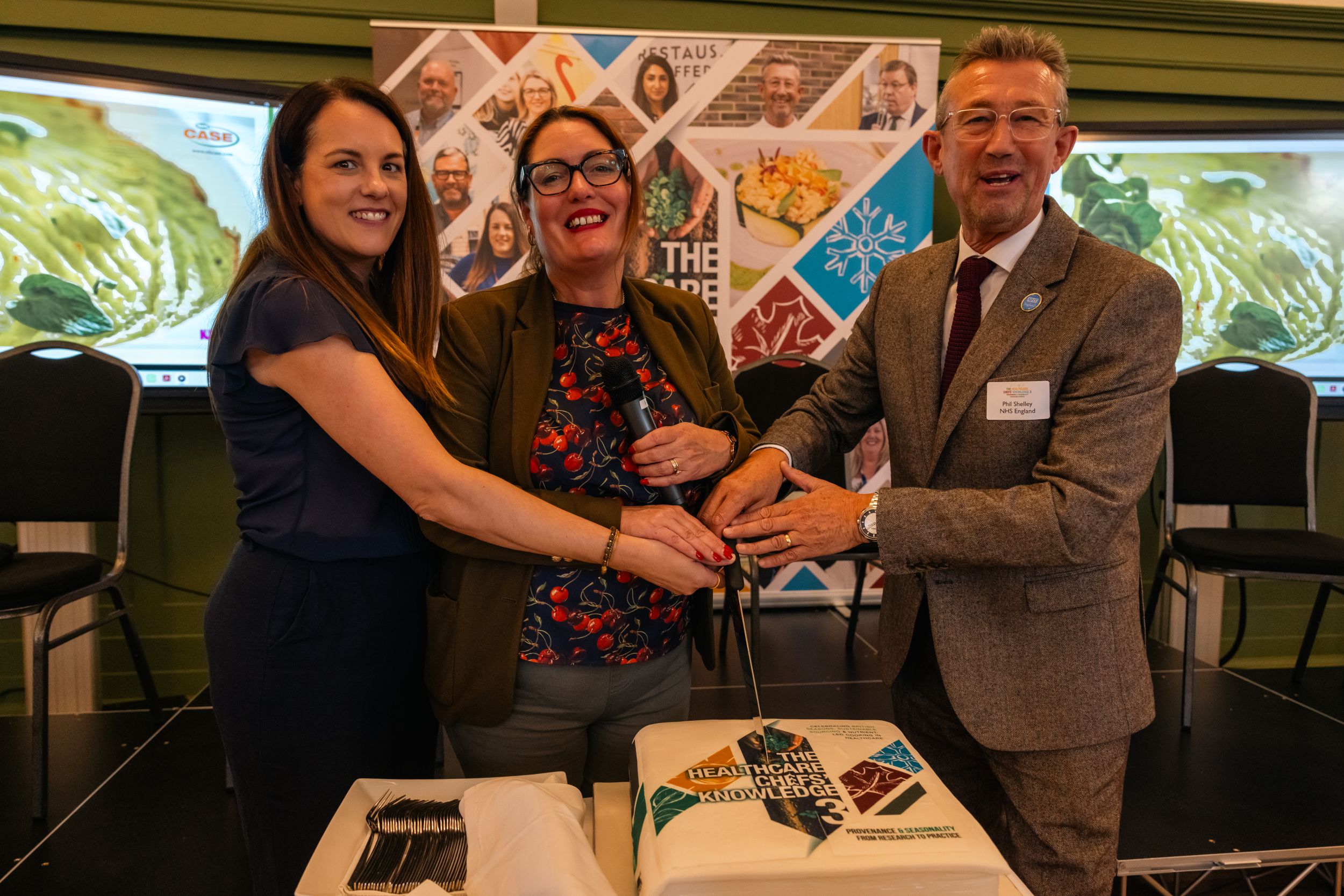
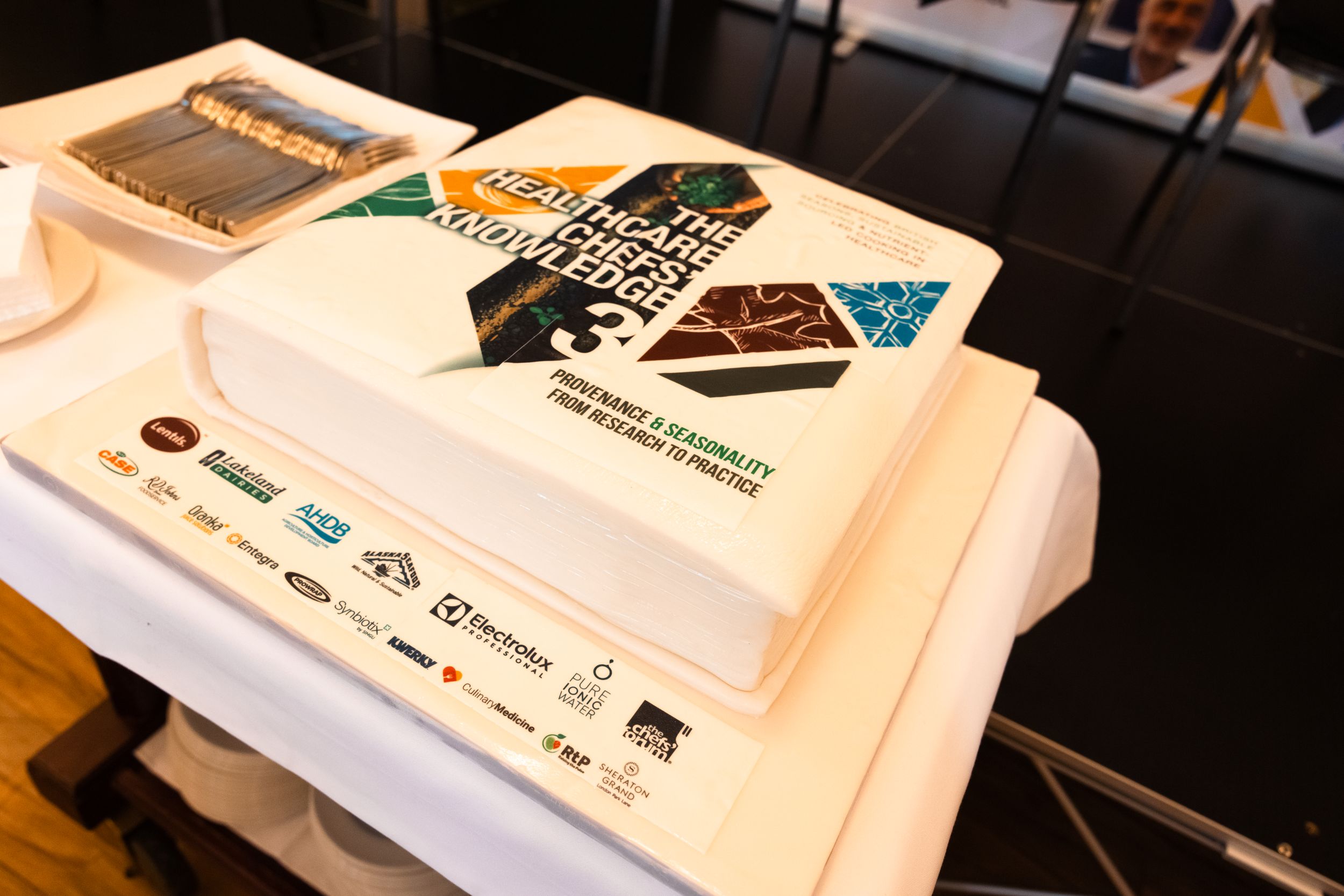 The celebration was completed with a spectacular cake specially created for the occasion by Executive Pastry Chef Biju Joshwa of Sheraton Grand Park Lane.
The cake provided a fitting centrepiece for the launch and marked not only the arrival of the third book, but the continued growth of a project that has developed into an important annual platform for sharing evolution, progress and best practice across healthcare catering.
“This Is About Turning Knowledge into Action”
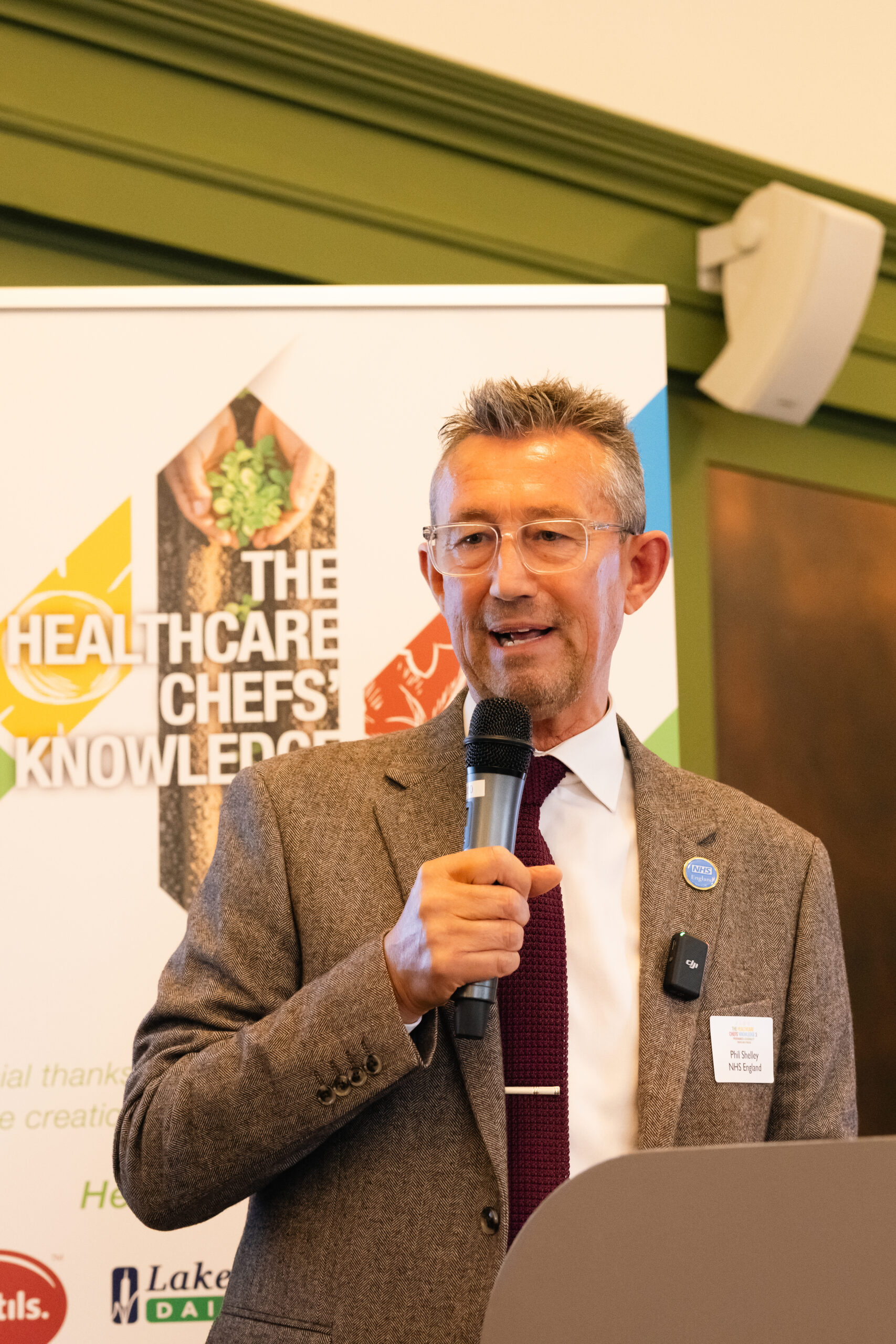 Philip Shelley, Project Lead for NHS England’s Healthcare Food Programme, said:
“The Healthcare Chefs’ Knowledge has developed into an important platform for bringing together the many different disciplines involved in healthcare food. This third edition continues that journey by focusing on provenance and seasonality and, crucially, how we turn knowledge into practical action.
“Healthcare catering has made significant progress, but continuing that progress requires collaboration between chefs, dietitians, procurement teams, suppliers, educators, patients and nursing teams. Events such as this enable us to share what is working, challenge ourselves to do better and ensure that good food remains central to patient care.”
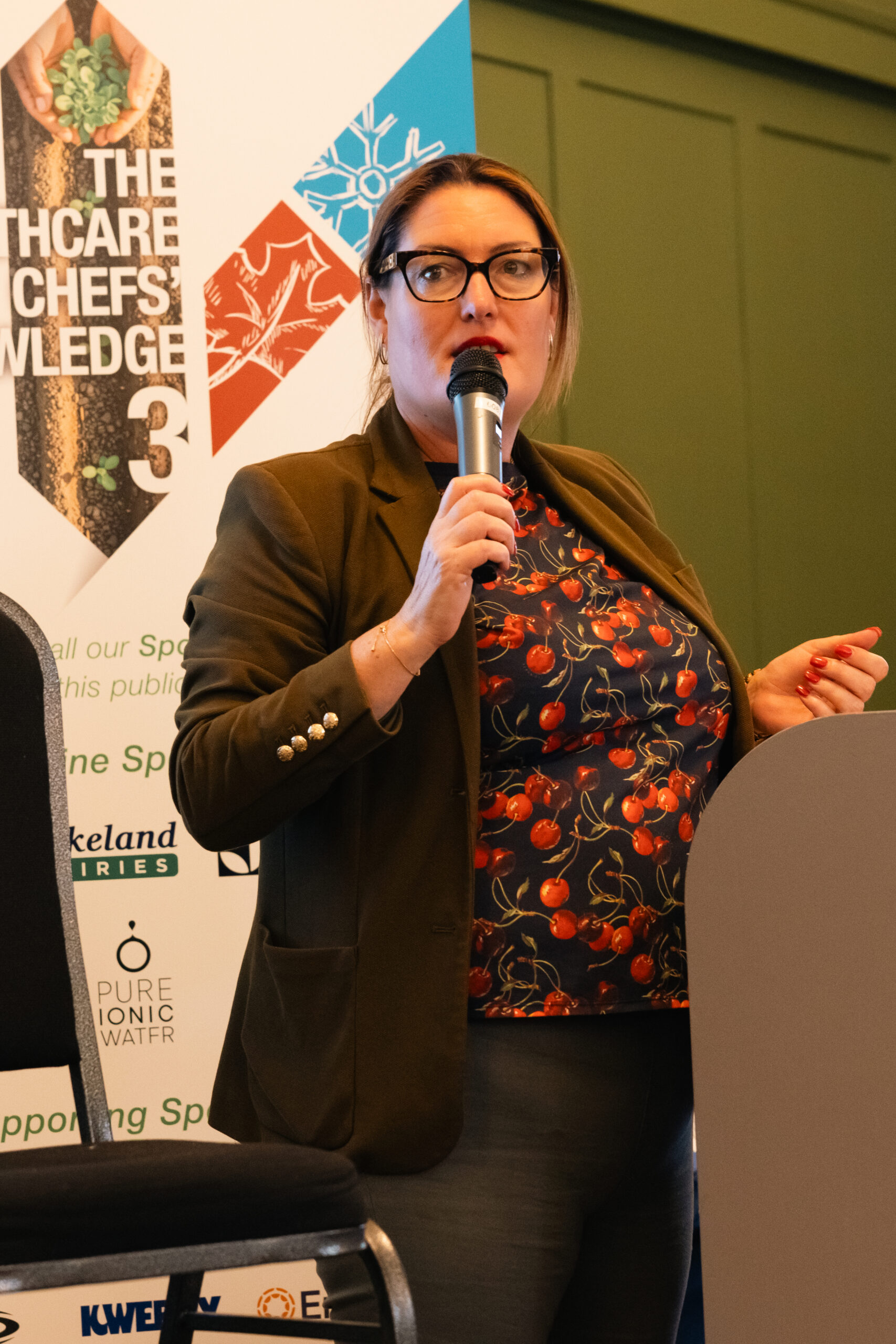 Catherine Farinha, Editor and Publisher of The Healthcare Chefs’ Knowledge and Founder of The Chefs’ Forum, added:
“It is quite incredible to see the third Healthcare Chefs’ Knowledge book launched and to realise that this has now become an annual event.
“What began as a way to bring knowledge, research and best practice together has grown into a genuine community of people passionate about improving healthcare food. This edition is very much about moving from research and data analysis to practice, taking conversations about provenance, seasonality, nutrition, sustainability and food waste and showing how they can translate into real changes in hospital kitchens.”
“I would like to express my sincere thanks to every chef, dietitian, nutritionist, procurement specialist, academic, NHS professional, contributor and industry expert who gave their time and expertise to this edition. I am equally grateful to our sponsors and partners, without whose support it simply would not be possible to produce and distribute this resource.”
“And what better way to launch a book about food than with fantastic dishes from the book, cooked by Nick Vadis and his team, and an incredible celebration cake from Biju Joshwa? It was a very special day.”
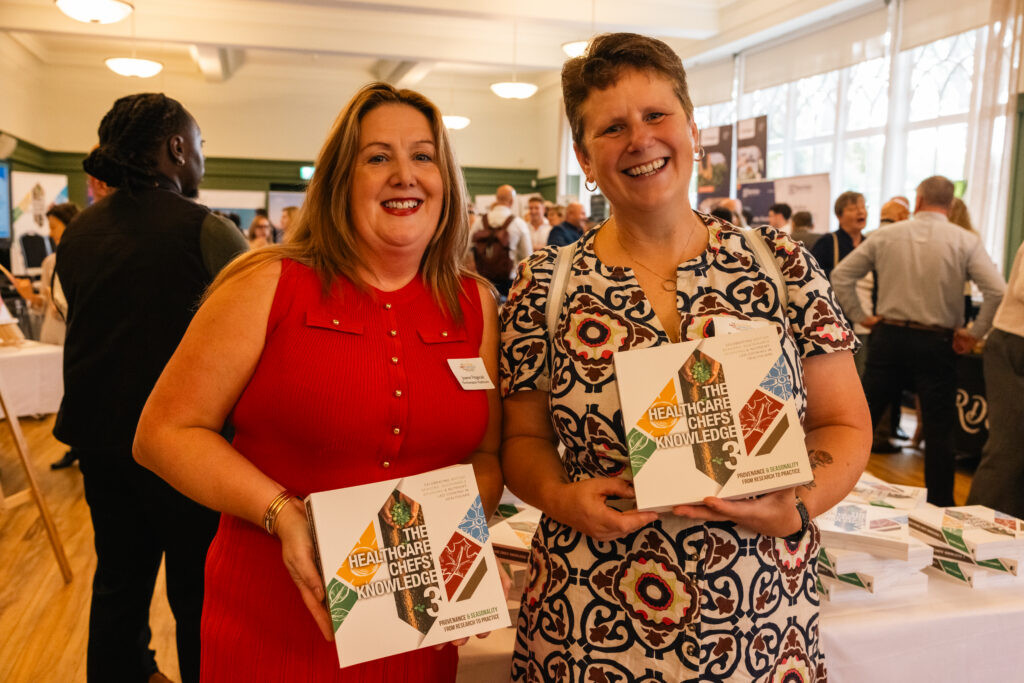 A Growing Healthcare Food Resource
Now in its third edition, The Healthcare Chefs’ Knowledge series has evolved into an annual publication that shares practical knowledge, research, case studies and innovation with those responsible for feeding patients across the UK.
This year’s theme, Provenance & Seasonality – From Research to Practice, examines the food journey from producer and supplier through procurement and into the hospital kitchen, ultimately reaching the patient’s plate.
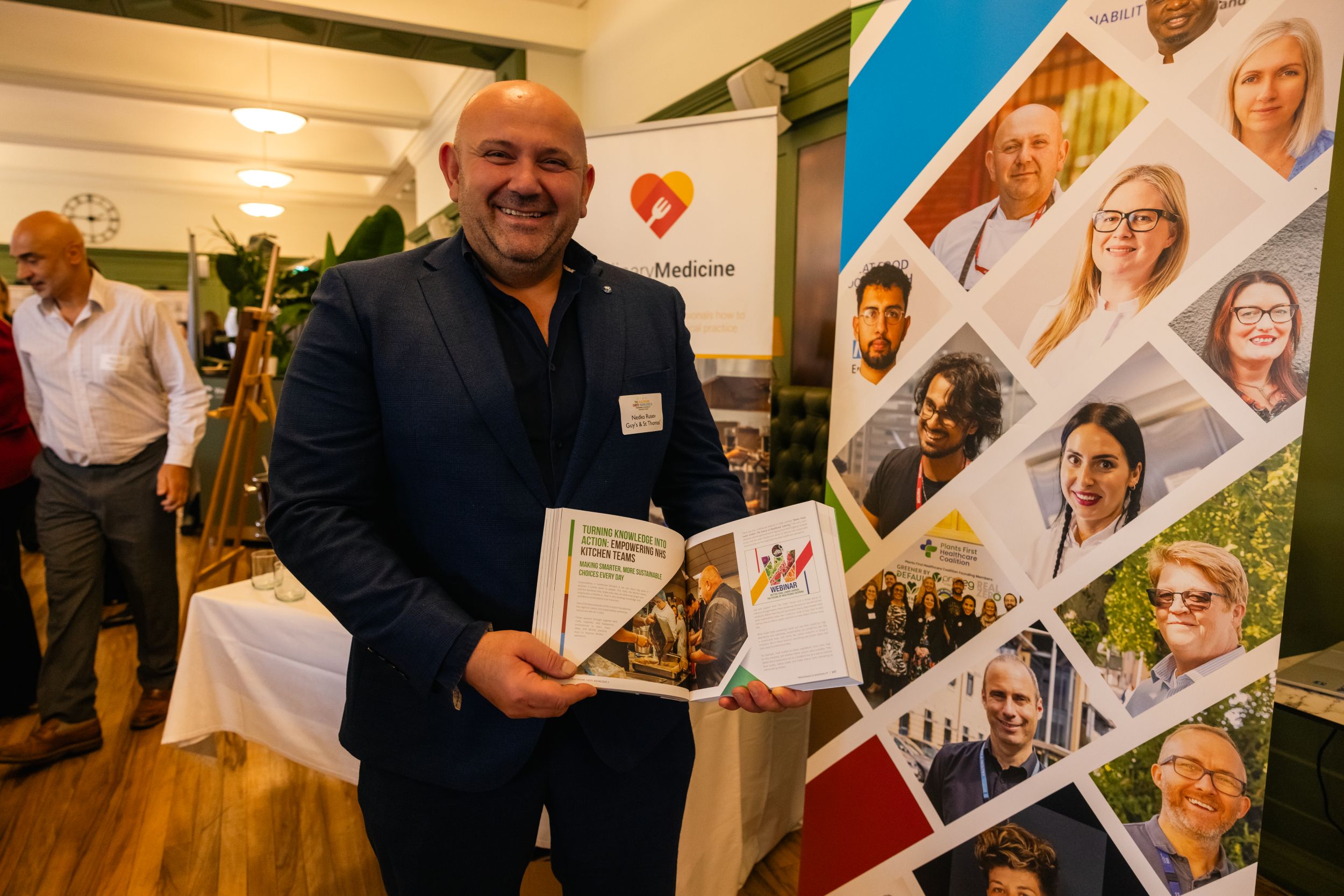 Across the four seasons, the book explores ingredients, nutrition, menu development, sustainability, food waste, patient engagement, and practical examples of innovation in healthcare foodservice.
The publication also celebrates the chefs and catering teams who work behind the scenes every day to ensure that patients receive nutritious, appropriate and enjoyable food.
The Chefs’ Forum would like to extend its sincere thanks to everyone who contributed to the third edition, and to all the sponsors and industry partners whose support has made the project possible.
With three editions now completed, the annual launch of The Healthcare Chefs’ Knowledge continues to serve as an important meeting point for the healthcare catering community: Celebrating progress, sharing knowledge, and, most importantly, helping to turn ideas into action.
Photography and film by Carlos Farinha @carlosclickuk
Chef of the Week Sponsored by Pure Ionic Water: Alfie Jebb-Crouch, Head Chef at The Lion at The Silverhand Estate
Chef of the Week sponsored by Pure Ionic Water celebrates the chefs that embody Pure Ionic Water’s core philosophy of ‘enhancing the culinary experience‘.
Pure Ionic Water works in many kitchens up and down the country from the pinnacle of Michelin stars to 5-star hotels, uniting them all, the desire to serve the very best. Understanding the difference premium hydrogen enhanced alkaline water makes to food, to the kitchen team’s performance and ultimately to the business’s profits is easy, just ask around.
“I only trust Pure Ionic Water at home and in my restaurant.”
Sat Bains, Chef Parton, Restaurant Sat Bains, 2 Michelin stars
For more information about Pure Ionic Water CLICK HERE
How long have you worked at your current restaurant?
I have been head chef for 4 months.
Where did your passion for cooking come from and where did you learn your skills?
A lot of my passion come from my mum and my love of eating good food.
What do you enjoy most about being a chef?
Being creative and working with likeminded people.
Name three ingredients you couldn’t cook without.
Salt, lemon and dashi.
Which piece of kitchen equipment couldn’t you live without?
Vitamix.
What food trends are you spotting at the moment?
Small plates and sharing style menus.
What do you think is a common mistake that lets chefs down?
A lack of respect, timekeeping and communication.
What is your favourite time of year for food, and why?
Autum. This is my favourite time of year for ingredients.
Which of your dishes are you most proud of?
Any of our dishes that use produce from our own estate.
How do you come up with new dishes?
Eating out, Instagram and previous places I’ve worked.
Who was your greatest influence?
Anthony Bourdain and Tony Parkin.
Tell us the chefs you admire.
Tony Parkin, Dan Smith, Tom Brown, and Adam Byatt.
What is your favourite cookbook?
Midsummer House – Daniel Clifford.
Who do you think are the chefs to watch over the next few months?
Jake Mills at Dorian.
VICTORINOX GIVES YOUNG CHEFS THE TOOLS THEY NEED TO GET STARTED IN THE PROFESSIONAL KITCHEN
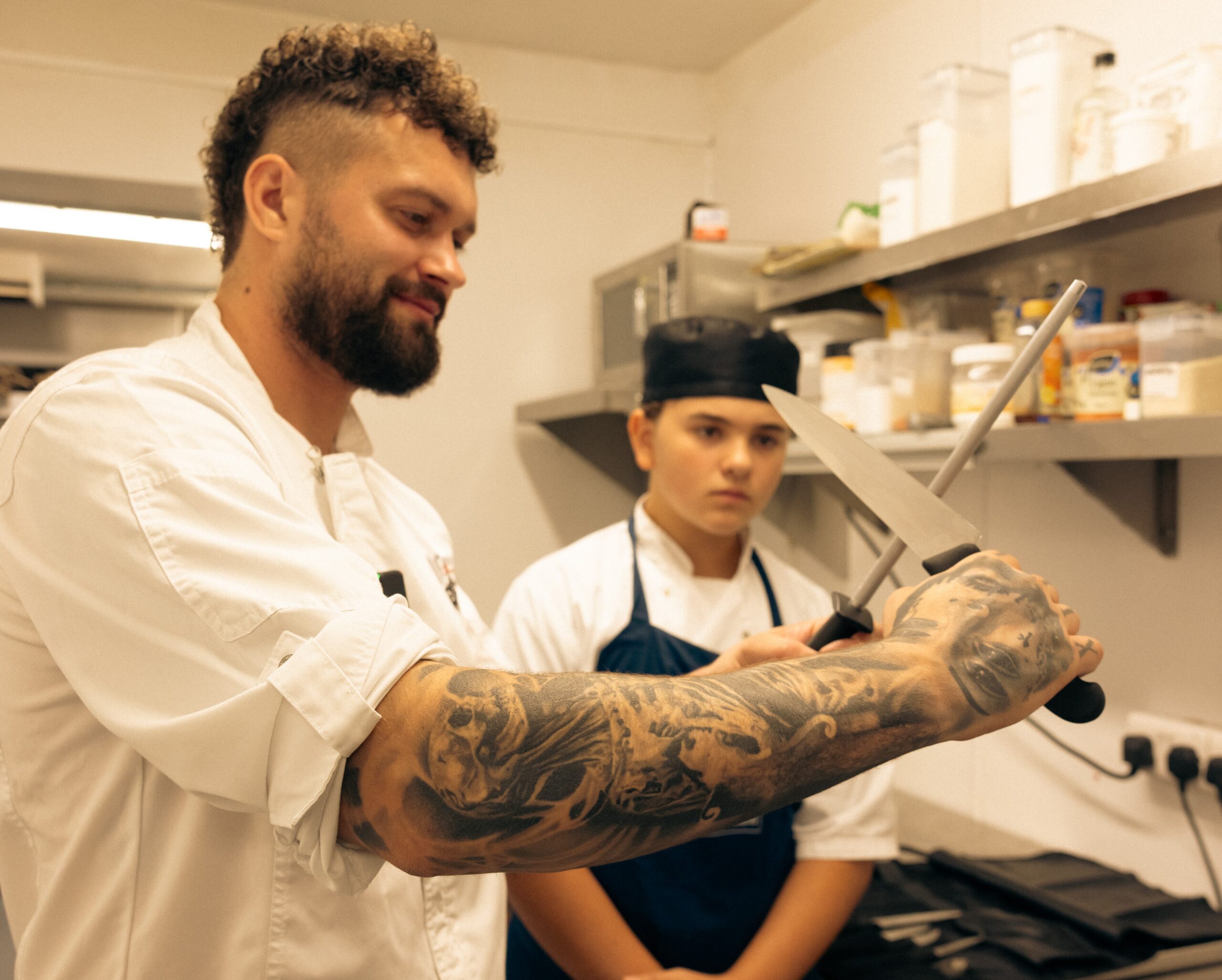 For any aspiring chef, one of the most important investments at the start of their culinary journey is a good set of knives.
Whether starting catering college, heading out on work experience or stepping into a professional kitchen for the first time, having the right tools – and learning how to use and care for them correctly – forms an essential part of a young chef’s development.
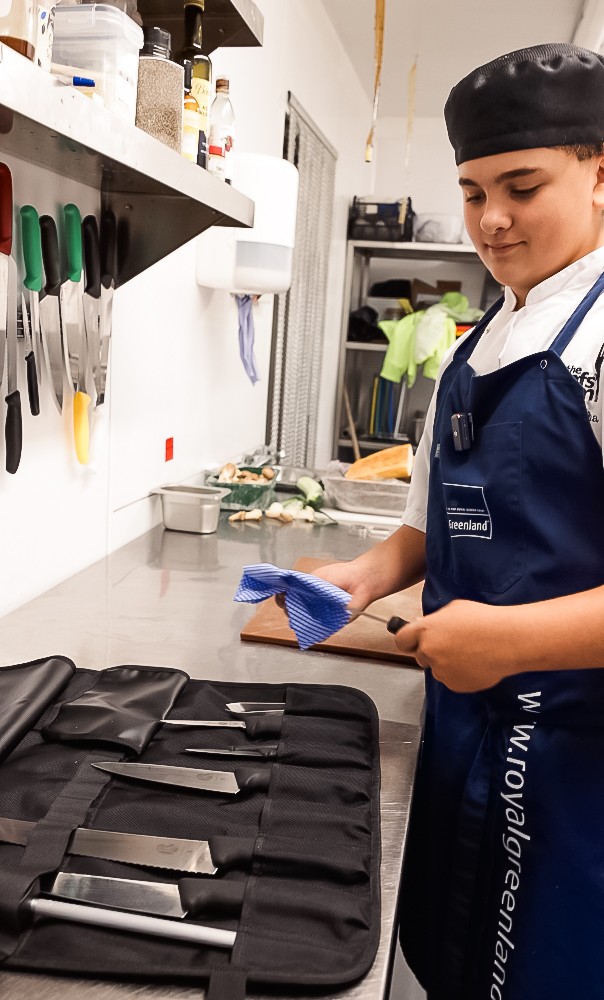
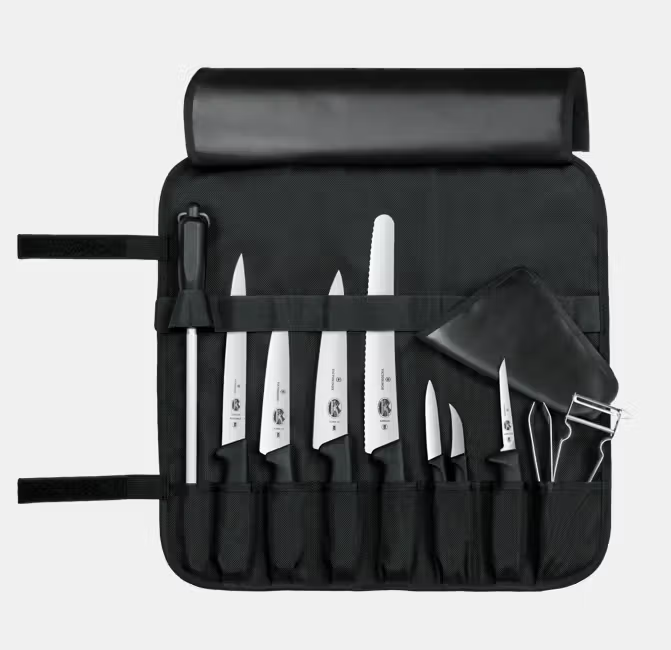
The Victorinox Chef’s Knife Roll Starter Set (link) https://www.victorinox.com/en-GB/Products/Cutlery/Knife-Blocks-Sets/Chef%27s-Knife-Roll-Starter-Set/p/5.4964.1 has been designed to provide the core tools a budding chef needs, bringing together a practical selection of professional kitchen knives and equipment in a single, convenient knife roll.
As part of The Chefs’ Knowledge, The Chefs’ Forum caught up with Michelin-trained chef Merrick Webber and aspiring young chef Riel Farinha to explore what the set includes and why having the right equipment matters when learning the craft.
A professional starter kit
Rather than filling a knife roll with equipment a student may rarely use, the Victorinox starter set concentrates on the fundamental tools that chefs reach for day after day.
The set includes a 19cm chef’s knife, the workhorse of the professional kitchen. From chopping vegetables and herbs to slicing, dicing and preparing meat and fish, it is one of the first knives a young chef needs to learn to handle with confidence.
A carving knife provides the longer, precise blade needed for cleanly slicing cooked meats and larger ingredients, while the serrated knife is particularly useful for tomatoes, soft-skinned fruit and other ingredients where a straight blade can crush rather than cut cleanly.
For more intricate preparation, the paring knife gives young chefs greater control when peeling, trimming and carrying out smaller, more detailed tasks.
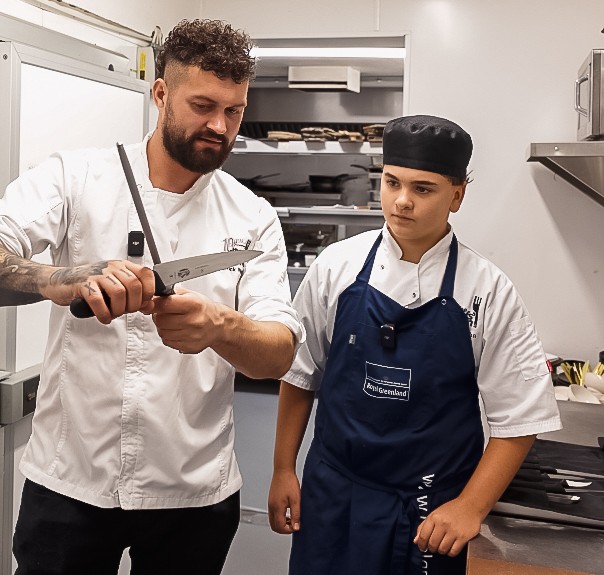
Just as importantly, the set includes a sharpening steel. Learning to maintain a knife is every bit as important as learning to use one. A properly maintained blade makes preparation easier and more precise and is an essential part of good professional kitchen practice.
Everything is housed in a professional knife roll, allowing students and young chefs to keep their equipment together, protected and ready to take between college, work experience placements and professional kitchens.
Learning professional knife skills with Merrick Webber
Riel has been using the Victorinox set while completing work experience with Merrick Webber at The Canal Inn, where he has been gaining hands-on experience of life in a working professional kitchen.
For Merrick, learning to use a small number of good-quality, appropriate knives correctly is far more valuable to a young chef than simply owning a large collection.
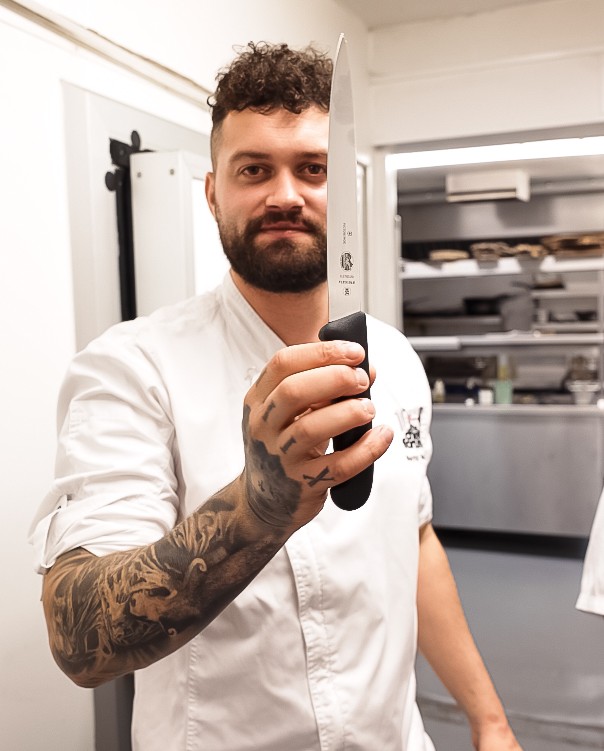
Merrick said:
“This is exactly the sort of set I’d recommend to a young chef starting out. It gives you the essential tools you’re going to use every day in a professional kitchen without overcomplicating things. Look after them, keep them sharp and learn to use them properly, and they’ll take you a long way.”
During his placement, Riel has been developing his knife skills while learning about preparation, organisation, kitchen discipline and the importance of looking after professional equipment.
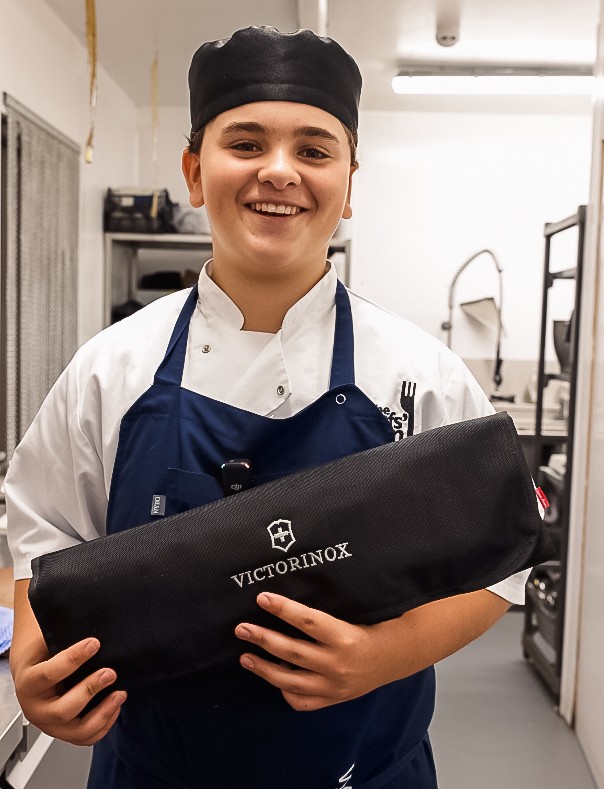
Riel added:
“It’s brilliant having everything I need together in one roll. The knives feel really professional and it means I can practise the same skills at college and on work experience that chefs use every day in the kitchen.”
Building confidence from the beginning
Good knife skills aren’t simply about speed. For a young chef, the priority is learning accuracy, consistency, safety and control.
Understanding which knife to select for a particular job, how to hold it correctly, how to work safely and efficiently and how to maintain the blade are fundamental skills that will remain relevant throughout a chef’s career.
A well-organised knife roll also encourages something every professional chef understands: respect for your tools.
For students progressing between college kitchens, stages, work experience and their first jobs, having their own core set of equipment also creates continuity. They can practise with the same knives, become accustomed to their balance and handling and steadily build confidence.
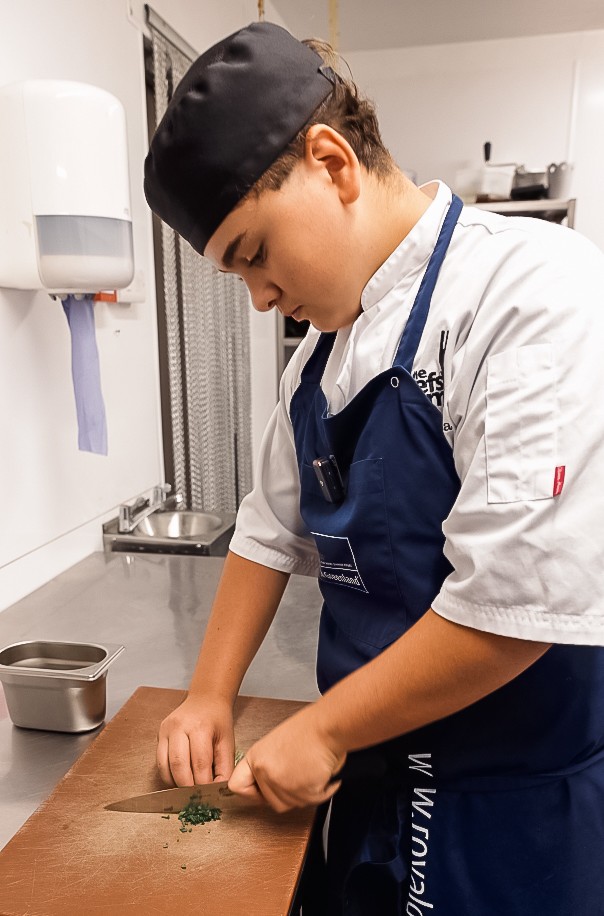
Everything a young chef needs to get started
The Victorinox Chef’s Knife Roll Starter Set provides a straightforward route into professional kitchen equipment without overwhelming a young chef with unnecessary tools. It is a particularly useful option for culinary students, apprentices, young chefs beginning their first kitchen role and anyone preparing for professional work experience.
At The Chefs’ Forum, we are passionate about giving the next generation the knowledge, skills, industry exposure and confidence they need to progress.
And sometimes that starts with something very simple: putting the right tools in their hands and showing them how to use them.
Following his work experience last week, Riel has now been offered a weekend job with Merrick and the team at The Canal Inn and is absolutely delighted. We will keep you posted. Stay tuned for updates!
For more information on the Victorinox Chef’s Knife Roll Starter Set, contact: Craig.antcliffe@victorinox.com
Photography by Carlos Farinha @carlosclickuk
Future Chef in the Making: Riel Farinha Begins Stage with Michelin-Trained Merrick Webber
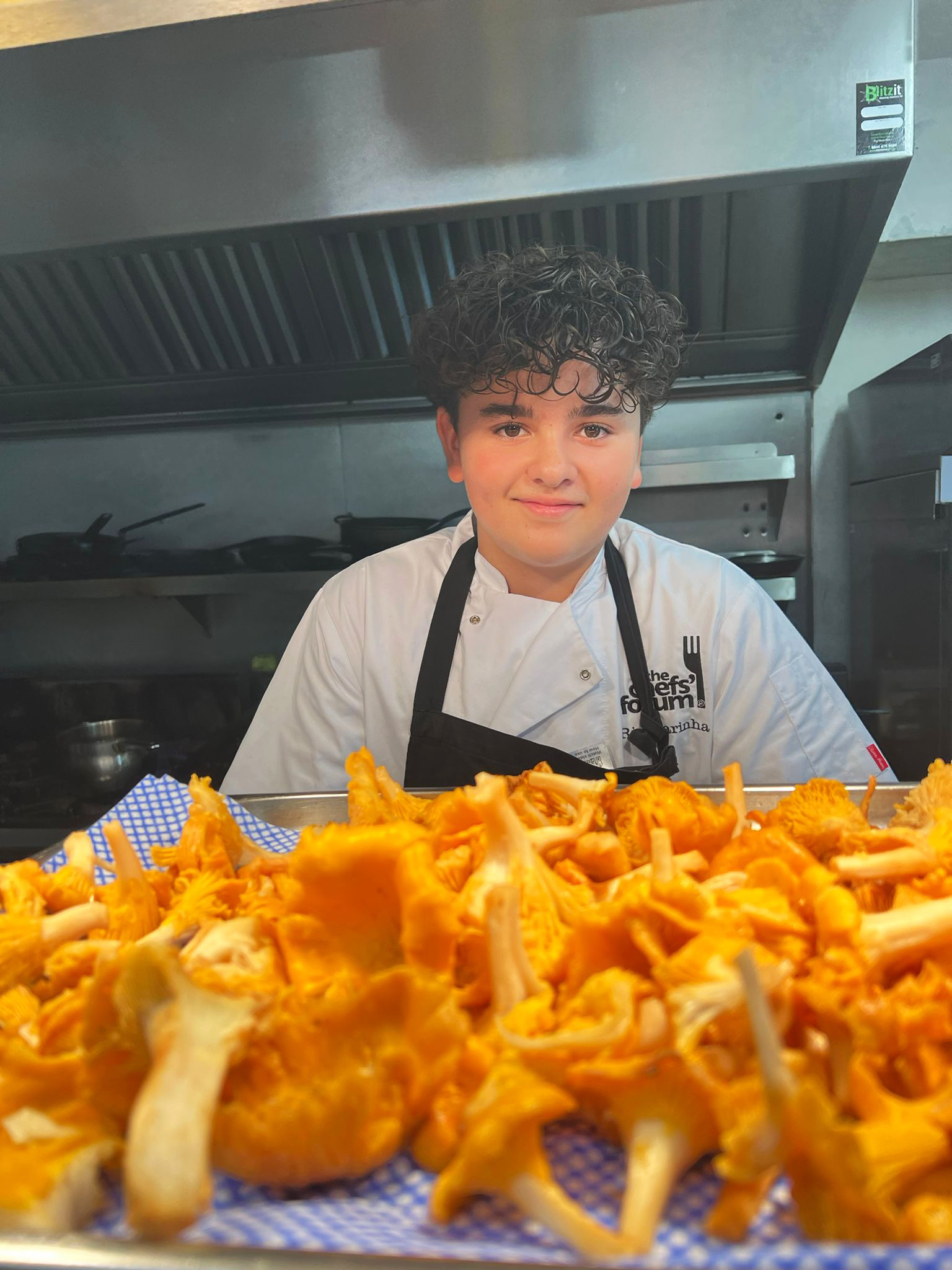 Fourteen-year-old aspiring chef Riel Farinha is spending four days in the professional kitchen at The Canal Inn, learning from Michelin-trained chef Merrick Webber as he prepares to embark on the next stage of his culinary education.
Riel is looking forward to starting Year 10, when he will begin a two-year programme combining school with professional catering education. One day each week, he will be released from school to study catering at UCS College Group, alongside studying Food Technology in the state-of-the-art training kitchens at Courtfields School.
And he certainly isn’t starting from scratch.
Riel has already clocked up some fantastic professional kitchen experience. He worked on stage as commis chef to Chef Jolly at the Reaton Professional Days event in Lithuania, before working with Chef Mattia at Sexy Fish Manchester for an Aussie Beef Academy event.
He has also experienced a busy Chefs’ Forum event kitchen at 24 Stories in Birmingham for the Birmingham Chefs’ Lunch and, most recently, completed a week’s work experience alongside Chef Oliver Certain at The Little Wine Shop. Next week, he will assist with prep for the launch of The Healthcare Chefs’ Knowledge at Capital City College Group (formerly Westminster Kingsway College).
Now he’s adding another important experience to the list.
Four Days, One Notebook and Plenty to Learn
During his four-day stage at The Canal Inn, Michelin-trained Merrick will take Riel through the workings of a professional kitchen, from preparation and organisation through to cooking dishes from across the entire menu.
He will also learn valuable ingredient skills, including how to correctly and humanely dispatch crustaceans before preparing and cooking them.
 Knife skills will also be a key focus as Riel road-tests the new Victorinox Chef’s Knife Roll Starter Set, which we will feature on our social media in the coming days.
Perhaps most importantly, Merrick has asked Riel to bring a notebook with him so he can record recipes, techniques, tips and the knowledge passed from chef to young chef throughout the four days.
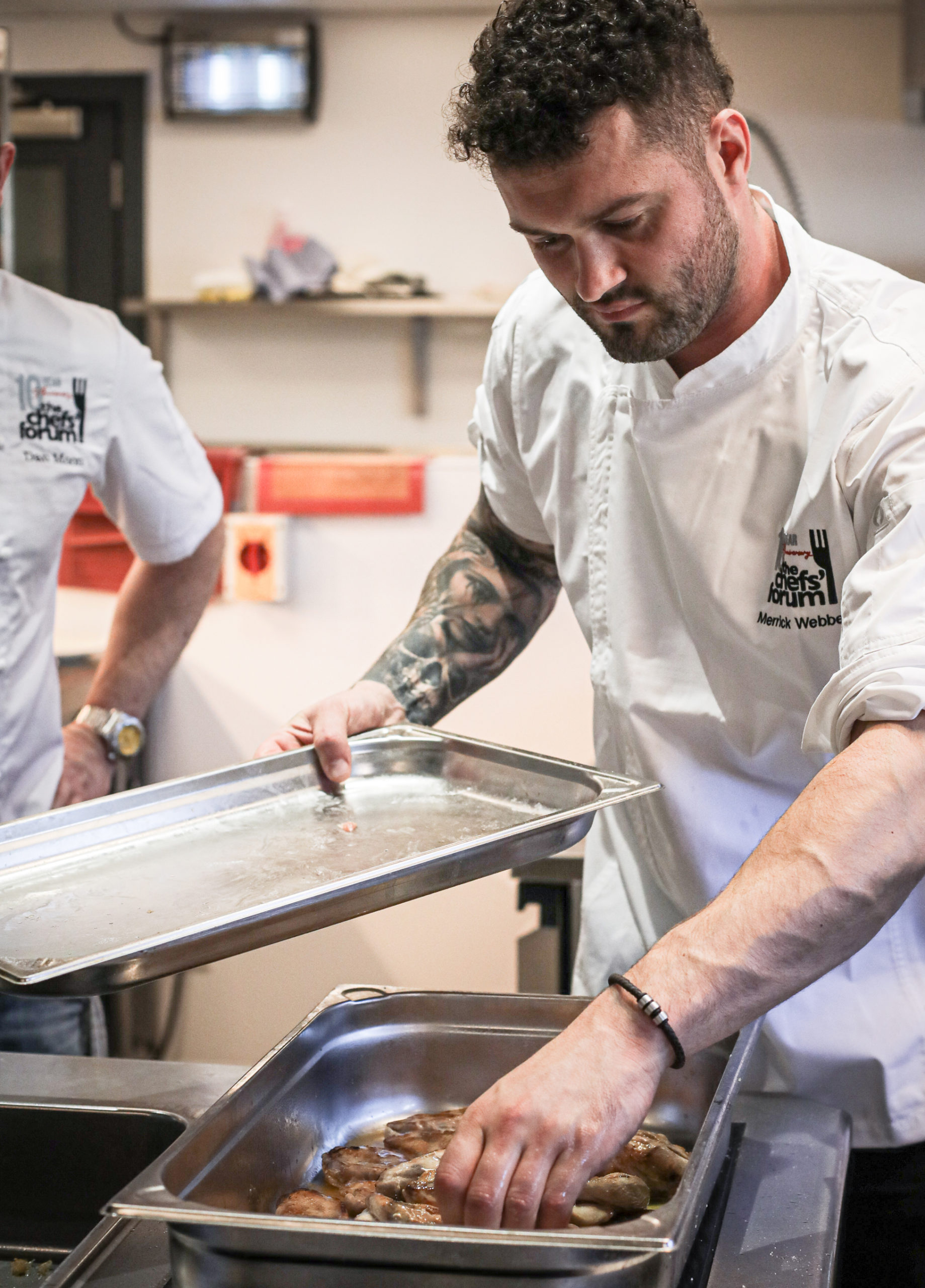 Merrick Webber said: “It’s really important that we give young people who genuinely want to become chefs the opportunity to experience a professional kitchen properly. I want Riel to absorb as much as he can while he’s here – from preparation and organisation to ingredients, techniques and understanding how the whole kitchen works. I’ve told him to bring a notebook because there’s so much knowledge that gets passed from chef to chef, and learning to listen, watch and write things down is a great habit to develop early.”
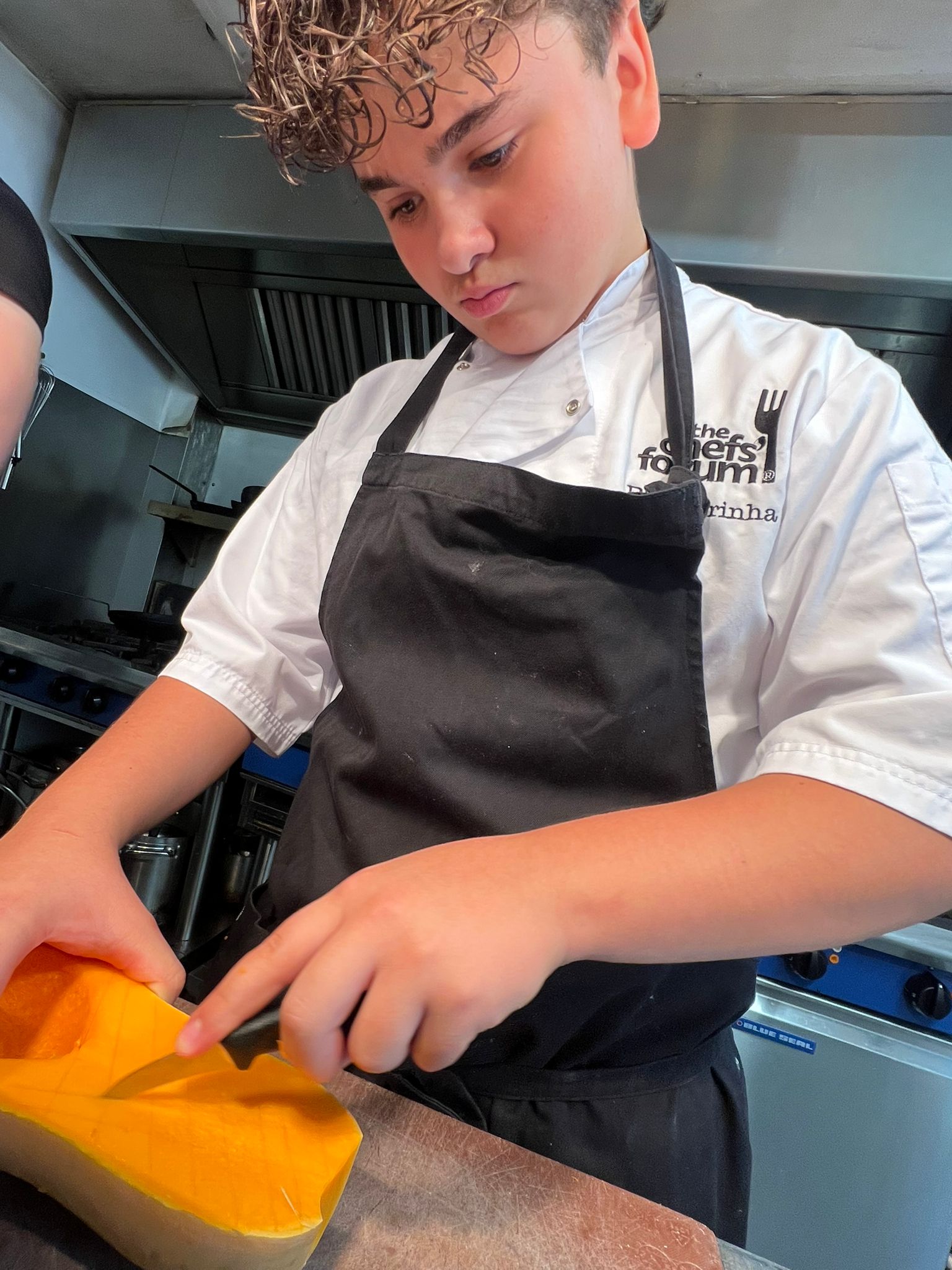 Riel said: “I’m really excited to work with Merrick and learn as much as I can. Every chef and kitchen I’ve worked with so far has taught me something different. I’ll definitely have my notebook with me! I’m looking forward to learning the menu, getting involved in the kitchen and then starting catering at college and Food Tech at school. Becoming a chef is what I want to do.”
Nurturing the Next Generation
At The Chefs’ Forum, we know just how important it is for young people considering a career in hospitality to spend meaningful time alongside professional chefs.
Experiences such as this, allow aspiring chefs, like Riel, to see the realities of a working kitchen, develop practical skills and, crucially, learn from experienced professionals willing to pass their knowledge on to the next generation.
A huge thank you to Merrick Webber for nurturing young talent and giving Riel such a fantastic opportunity at this important stage in his development.
With catering college, Food Technology and plenty more professional kitchen experience ahead, this is just the beginning of Riel’s journey.
We’ll keep you posted on how he gets on – watch this space!
Michael Coaker Honoured with France’s Prestigious Order of Agricultural Merit
 The Chefs’ Forum is delighted to celebrate Michael Coaker, Culinary Ambassador at the London Geller College of Hospitality and Tourism, University of West London, who has been honoured with France’s prestigious Order of Agricultural Merit (Ordre du Mérite Agricole).
The award recognises Michael’s outstanding contribution to culinary education, the preservation and teaching of classical culinary arts and, importantly, his work over the past two decades strengthening the gastronomic and cultural relationship between Britain and France.
For more than 20 years, Michael has supported the Entente Cordiale Culinaire, bringing together young English and French hospitality students and forging friendship, understanding and professional development through shared culinary and cultural experiences.
The programme gives aspiring hospitality professionals the opportunity to learn from one another, experience different culinary traditions and develop an appreciation of the heritage and techniques that have shaped British and French gastronomy.
For Michael, this exchange has always been about opening young hospitality students’ eyes to new cultures and building professional relationships that will, no doubt, continue throughout their careers.
Throughout his distinguished teaching career at the University of West London, Michael has been a passionate advocate for the classical foundations of the culinary arts.
He has worked tirelessly to ensure that traditional cooking methods, skills and techniques continue to be taught to new generations of chefs, giving students the foundations they need to develop their own creativity and succeed at the highest levels of the profession.
His commitment to developing young people has also extended to his work with the Duke of Edinburgh’s Award and Young Talent Escoffier, where the values of discipline, education and culinary excellence are all central to nurturing the chefs and hospitality leaders of tomorrow.
Michael also works closely with the esteemed Chef Gilles at the French Residence in London, helping to promote French gastronomy, culinary culture and the enduring importance of Franco-British culinary relations in the UK.
Receiving the Order of Agricultural Merit places Michael among a distinguished group of hospitality professionals recognised for their contribution to food, gastronomy and the promotion of French culinary culture.
He joins respected industry figures including Lionel Rigolet, Mark Flanagan, Duncan Palmer and Christian, making the recognition an especially proud moment for Michael, his colleagues and the generations of students he has supported throughout his career.
 Michael said:
“For the past 20 years, I have been incredibly proud to support the Entente Cordiale Culinaire and to see young English and French hospitality students learn from each other. Food and hospitality provide a wonderful way of bringing people together, sharing traditions and creating friendships that can last throughout a career.
“It is also hugely important that we continue to teach and celebrate the classical foundations of our profession. These skills and traditions give young chefs the knowledge and confidence upon which they can build their own careers and creativity.
“To receive the Order of Agricultural Merit and to join such respected names from our industry is a tremendous honour.”
Michael’s award is wholly well-deserved recognition of a career dedicated to teaching culinary students, and safeguarding culinary knowledge being passed from one generation to the next.
It also celebrates something particularly important to The Chefs’ Forum: the ability of food and hospitality to bring people together across borders, cultures and generations and supporting young chefs and hospitality professionals, the very foundation on which we are built.
Everyone at The Chefs’ Forum warmly congratulates Michael Coaker on this richly deserved honour and thanks him for his extraordinary commitment to culinary education and the next generation of hospitality professionals.
Chef of the Week Sponsored by Pure Ionic Water: Mervyn Desir, Lead Development Chef at Whitbread
Chef of the Week sponsored by Pure Ionic Water celebrates the chefs that embody Pure Ionic Water’s core philosophy of ‘enhancing the culinary experience‘.
Pure Ionic Water works in many kitchens up and down the country from the pinnacle of Michelin stars to 5-star hotels, uniting them all, the desire to serve the very best. Understanding the difference premium hydrogen enhanced alkaline water makes to food, to the kitchen team’s performance and ultimately to the business’s profits is easy, just ask around.
“I only trust Pure Ionic Water at home and in my restaurant.”
Sat Bains, Chef Parton, Restaurant Sat Bains, 2 Michelin stars
For more information about Pure Ionic Water CLICK HERE
How long have you worked at your current restaurant/company?
I’ve worked at Whitbread for over 10 years, working in food development and innovation across all brands, Premier Inn, Bar & Block, Beefeater, Brewers Fayre, Table Table, Cook House & Pub. My role focuses on creating and developing dishes, identifying food trends and bringing menu concepts to life at scale, but my background is firmly rooted in restaurant kitchens, where I spent many years honing my craft before moving into development.
Where did your passion for cooking come from and where did you learn your skills?
My passion for cooking came from loving eating and growing up around food, seeing how it brings people (family) together. From an early age, I was fascinated by complex flavours, different cuisines and then loving the theatre of a busy kitchen.
I went on to study for a Culinary Arts Diploma at Westminster Kingsway College, which gave me a strong technical foundation. From there, I continued my development in professional kitchens, including time working in France at The Ritz, La Pont de la Tour and Odette’s, to name a few, where I gained a huge appreciation for classical techniques, respect for ingredients and the importance of simplicity. Throughout my career, I’ve also had the pleasure of training and working with some talented chefs such as Frederick Foster, Tom Kerridge and Jamie Oliver.
What do you enjoy most about being a chef?
Initially, it was the buzz of a busy professional kitchen. I loved the energy of service, the pressure, the camaraderie of the brigade, everyone pulling together to deliver a great experience for guests. There’s a unique atmosphere in a professional kitchen that’s hard to replicate elsewhere.
As my career has evolved, what I enjoy most is the opportunity to learn and discover new flavours, ingredients and techniques continually. I’ve been fortunate to work abroad and dine at some incredible restaurants around the world, including Arzak in San Sebastián, Alinea in Chicago and Noma in Copenhagen. Experiencing different food cultures has had a huge influence on how I think about food and continues to inspire the dishes I create today. Taking an idea, a flavour or an ingredient and turning it into something people genuinely enjoy eating. Seeing a dish go from concept to menu and become a guest favourite is incredibly rewarding. For me, being a chef is about combining creativity, craftsmanship and a genuine passion for making people happy through food.
Name three ingredients you couldn’t cook without.
- Garlic
- Thyme
- Brown Onions
Which piece of kitchen equipment couldn’t you live without?
A sharp chef’s knife. It doesn’t matter how much technology there is in a kitchen these days, it’s the most versatile and essential in any kitchen.
What food trends are you spotting at the moment?
Guests are becoming much more adventurous with big and bold flavours. Korean, Japanese and Southeast Asian influences all continue to grow, while plant-forward dishes are becoming increasingly creative rather than simply being alternatives to meat-based dishes.
I’m also seeing a real demand for premium comfort food. Guests still want indulgence, but they’re looking for more interesting flavours and ingredients.
There’s a growing demand for high-protein and health-conscious menu choices, without compromising on flavour or indulgence. Guests are becoming more aware of nutrition and are looking for dishes that feel balanced while still delivering a great eating experience.
Fermentation continues to influence menus, whether that’s through kimchi, miso, gochujang or fermented hot sauces. These ingredients add depth, complexity and layers of flavour that guests are increasingly familiar with and excited to try.
What do you think is a common mistake that lets chefs down?
Chefs not mastering the basics. Early in my career, I learnt that great cooking starts with solid foundations, good technique, consistency and attention to detail.
I also think some chefs forget who they’re cooking for…The guest should always be at the centre of what we do. Some of the best dishes I’ve eaten, whether in a local bistro or at world-renowned restaurants like Skof, have been relatively simple but executed exceptionally well.
For me, it’s about constant learning, which is what separates good chefs from great ones. No matter how long you’ve been in the industry, there’s always something new to learn.
What is your favourite time of year for food, and why?
Autumn!! The variety of produce is wide, and the flavours become richer and more comforting.
Which of your dishes are you most proud of?
It’s difficult to choose just one, I’m proud of many products and dishes I’ve created over the years. I was particularly proud of creating a range of BBQ rubs and sauces from scratch, developing a double-crunch coating recipe for chicken wings, developing my burger blend recipe and a Black Forest Crownie that combined rich chocolate and cookie dough indulgence with black cherry goodness.
Each of these projects challenged me in different ways and required a balance of creativity, technical knowledge and commercial thinking. Seeing a product go from an initial idea to being enjoyed by guests is one of the most satisfying parts of being a development chef.
How do you come up with new dishes?
Gather inspiration from restaurant visits, travel, consumer trends, social media and supplier innovation. I then look at how those ideas can be adapted into something unique, commercially viable and operationally simple.
Who was your greatest influence?
Without a doubt it’s my gran! She inspired my love of food from an early age and taught me that great food doesn’t have to be complicated. She cooked with love, passion, care and generosity. Seeing the joy her food brought to the family is what first made me fall in love with food. Throughout my career, those values have stayed with me.
Tell us three chefs you admire.
- Elen Arzak
- Grant Achatz
- Tom Barnes
What is your favourite cookbook?
Les Halles Cookbook by Anthony Bourdain. I’ve always loved his curiosity about food and culture. In this book, he shows that great food isn’t just about technique. It’s about people, places and storytelling as well as great recipes.
Who do you think are the chefs to watch over the next few months?
The chefs that catch my attention are pushing flavour boundaries while keeping food accessible, drawing inspiration from global cuisines, particularly Asia and the Middle East, while staying true to authentic ingredients and techniques.
I think there are some incredibly talented young chefs coming through who are focusing on fermentation, open-fire cooking and creating memorable guest experiences rather than simply following trends. The chefs to watch are often not the ones with the biggest profiles, but those quietly developing exciting food and influencing what appears on menus across the industry.
What’s been your favourite new restaurant opening of the last year?
SKOF, hands down. What Tom Barnes has created is impressive. The food is technically excellent but still feels honest and ingredient led. It’s the sort of place that inspires you as a chef and reminds you why you fell in love with the industry in the first place.
Another great experience again in Manchester was Another Hand. The creativity, flavour combinations and modern approach to cooking were top draw.
Chef of the Week Sponsored by Pure Ionic Water: Jai Shaikh, Head Chef at Wolesley City
Chef of the Week sponsored by Pure Ionic Water celebrates the chefs that embody Pure Ionic Water’s core philosophy of ‘enhancing the culinary experience‘.
Pure Ionic Water works in many kitchens up and down the country from the pinnacle of Michelin stars to 5-star hotels, uniting them all, the desire to serve the very best. Understanding the difference premium hydrogen enhanced alkaline water makes to food, to the kitchen team’s performance and ultimately to the business’s profits is easy, just ask around.
“I only trust Pure Ionic Water at home and in my restaurant.”
Sat Bains, Chef Parton, Restaurant Sat Bains, 2 Michelin stars
For more information about Pure Ionic Water CLICK HERE
How long have you worked at your current restaurant?
Around 2 years.
Where did your passion for cooking come from and where did you learn your skills?
My earliest inspiration was my Mum, an amazing cook. Childhood memories included growing up around good homecooked food, a variety of fresh ingredients, herbs, spices, fresh veg and from then on, it’s been a journey.
What do you enjoy most about being a chef?
The satisfaction that comes from developing and creating new dishes.
Name three ingredients you couldn’t cook without.
Onion, garlic & olive oil.
Which piece of kitchen equipment couldn’t you live without?
My knife set.
What food trends are you spotting at the moment?
Gen Z eating habits.
What do you think is a common mistake that lets chefs down?
Over complicating dishes.
What is your favourite time of year for food, and why?
Spring – I absolutely love everything about the produce.
Which of your dishes are you most proud of?
My strawberry trifle.
How do you come up with new dishes?
I take inspiration from classics and always keep an eye on modern trends, whether that’s a fruit, veg, protein etc.
Who was your greatest influence?
My mentor chef Peter Washbourne.
Tell us three chefs you admire.
Marco Pierre White, Daniel Bouloud, Raymond Blanc.
What is your favourite cookbook?
White Heat.
Who do you think are the chefs to watch over the next few months?
Will Murray and Jack Croft at Fallow.
What’s been your favourite new restaurant opening of the last year?
Oudh 1722 (Borough Market).