National NHS Chef of the Year Nedko Rusev Launches Low-Carbon Menu at St Thomas’ Hospital
 If we all make small adjustments in our own environments, we can bring about meaningful change. This idea was introduced during our recent series of Carbon and Sustainability Workshops in collaboration with NHS England and Dr Andrea Zick from Brunel University. This principle also underpins a pioneering new low-carbon menu launched at St Thomas’ Hospital by Nedko Rusev, NHS National Chef of the Year, alongside Catering Manager Annette White.
The menu marks a major advancement in sustainable healthcare catering, combining culinary excellence with environmental responsibility on a large scale. Serving thousands of patients, staff, and visitors daily, St Thomas’ demonstrates how climate-conscious food can be both appealing and practically implemented within the public sector.
 At the centre of the launch is a standout dish: venison and lentil moussaka. This hybrid recipe intentionally reduces the amount of red meat while preserving flavour, nutrition, and familiarity. By combining roughly 50% venison with 50% lentils, the dish achieves a significantly lower carbon footprint while maintaining high protein content and customer appeal.
Tim Radcliffe, Net Zero Food Programme Manager at NHS England, advocates for including both low-carbon wild venison and lentils in hospital menus. He has also been collaborating with Ned and the team to develop a ‘Meat Me Half Way’ menu, reformulating recipes to contain less red meat and enhancing nutritional value with lentils or pea protein, while also reducing carbon footprint. Check out Tim’s message in this film from the menu development day at West London College.
Go and Eat Lentils!
The inspiration behind the moussaka can be traced back to the public sector lentil menu development day at West London College, followed by further refinement during lentil cookery masterclasses delivered for Lentils.org with Nedko and his brigade at the hospital. What began as collaborative development work has now translated into real-world application on a major NHS menu – a powerful example of knowledge transfer in action.
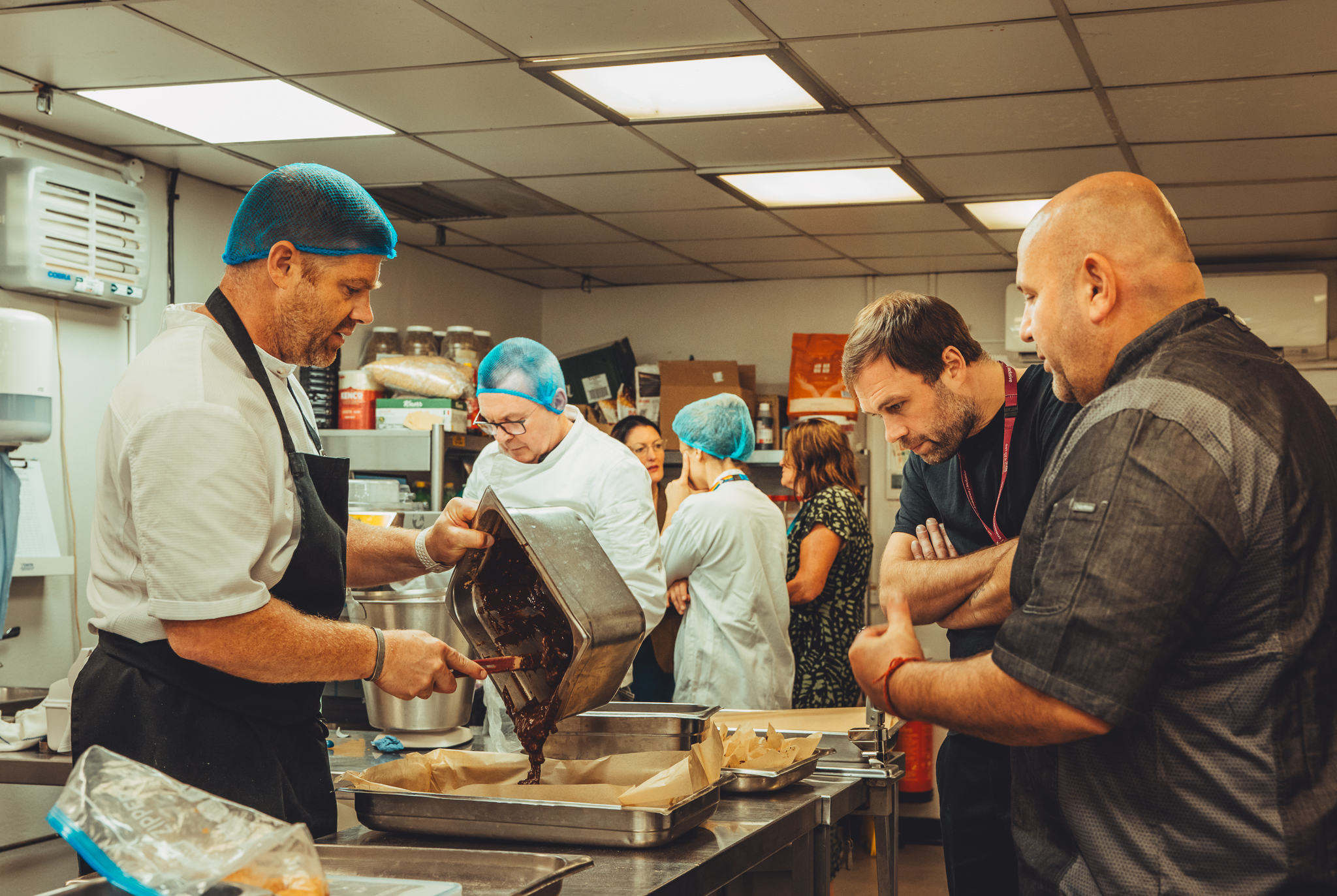 The wider menu showcases a strong emphasis on plant-forward and low-impact dishes. From the menus in circulation, diners can choose options such as venison and lentil chilli, shepherd’s pie made with venison and lentils, plant-based cottage pie, sweet potato, chickpea and spinach curry, vegetable frittata, lentil and vegetable soups, and coconut bean stew. These sit alongside responsibly sourced fish, reduced-meat classics and clearly labelled vegan and vegetarian dishes.
A traffic-light style carbon labelling system is used across the menus, supported by QR codes that enable customers in the retail restaurant to scan for allergens, nutrition, and sustainability data. Behind the scenes, everything from procurement and recipe formulation to carbon calculation, menu costing, and waste monitoring is integrated into a single system, making sustainability measurable rather than abstract.
Food waste reduction remains a key part of the programme, with plate waste, production waste, and counter waste carefully monitored. Used cooking oil is collected and converted into biofuel for the iconic London buses, while surplus food redistribution is integrated into the broader environmental strategy. Collectively, these steps demonstrate how operational details support the overall ambitions.
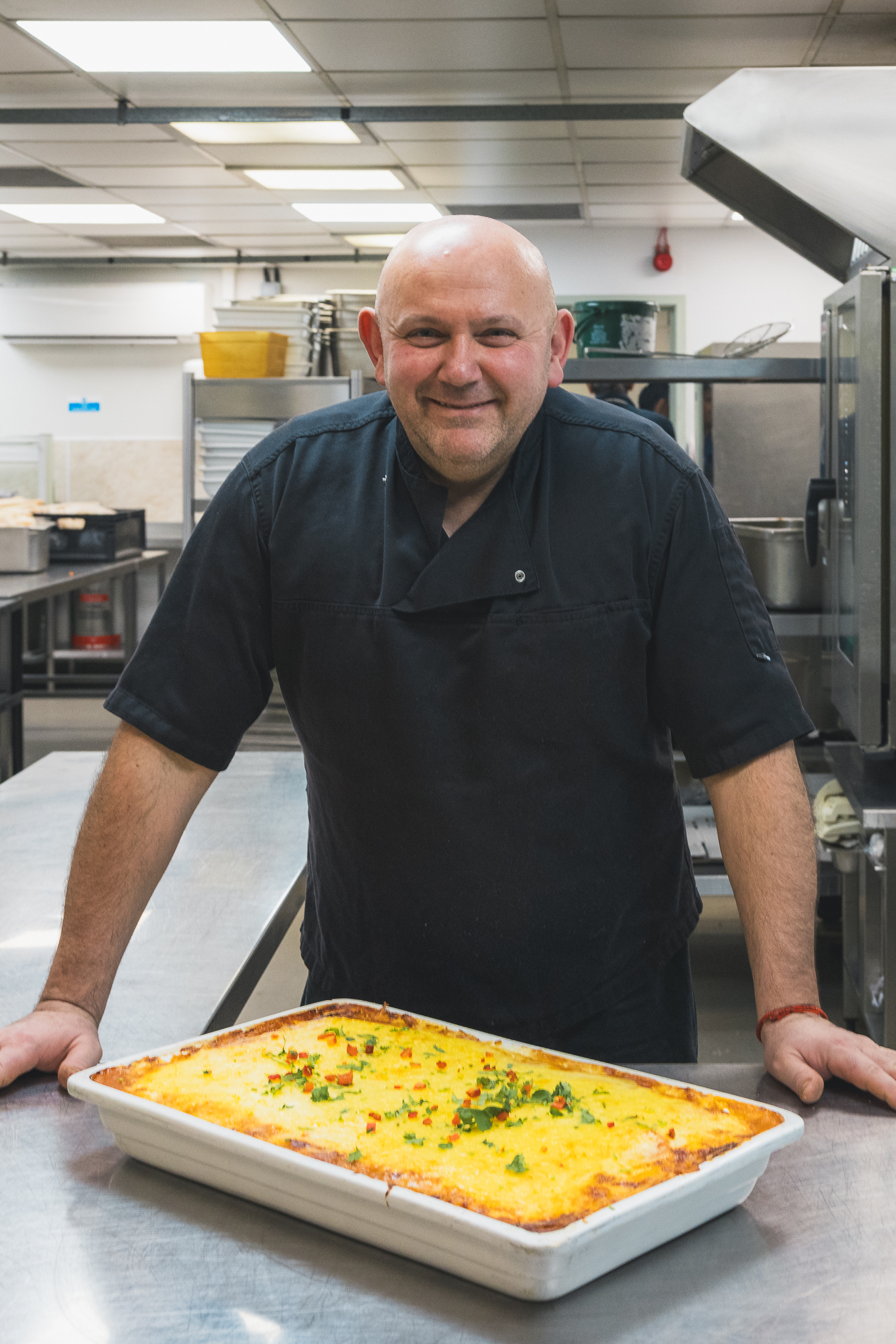
 Nedko’s approach is based on pragmatism rather than perfection. “We’re not asking everyone to change everything overnight,” he has said previously. “But if each of us makes small, thoughtful changes where we can, the cumulative impact is enormous.” That message resonates strongly in a healthcare setting, where scale amplifies both problems and solutions.
Looking ahead, this work remains far from finished. Nedko and Annette will contribute seasonal, carbon-friendly farm-to-fork recipes to our third book centred on sustainable healthcare catering:
The Healthcare Chefs’ Knowledge 3: Provenance & Seasonality – From Research to Practice.
This is our third publishing collaboration with NHS England that aims to share insights well beyond St Thomas’ from our workshops and research conducted with healthcare chefs and foodservice stakeholders throughout 2025.
Nedko and Annette will also collaborate closely with Denise Charles and the teaching team at West London College to establish a work experience programme, allowing students to gain firsthand exposure to public sector and healthcare catering at its best. Students will have the opportunity to see how food, sustainability, systems, and leadership come together within an exemplary NHS Trust.
 In a time when climate targets can seem daunting, St Thomas’ Hospital offers a powerful reminder: meaningful change isn’t always about big gestures. Sometimes, it begins with a lentil.
Photography by Carlos Farinha @carlosclickuk