From Research to Real kitchens: New Low‑carbon Menus Report Empowers SME Chefs to Drive Food System Change
 The hospitality sector made a significant step towards climate-positive cooking this week, as chefs, educators, researchers, and industry leaders gathered at the University of West London for the launch of Low-Carbon Menus: Tools and Tactics to Empower SME Chefs, a new sector-facing report co-authored by Andrea Zick and Amy Fetzer, published as part of the UKRI Transforming the UK Food System Programme.
The launch event brought together changemaking leaders, shaping the future of sustainable gastronomy, along with the newly appointed Assistant Dean of the London Geller College for Hospitality and Tourism, Professor Ioannis S. Pantelidis. Attendees praised the report for bridging the gap between academic research, sustainability policy, and the real, everyday pressures faced by professional kitchens.
It was also a moment of celebration: colleagues across industry and academia congratulated the co-authors Amy Fetzer and Andrea Zick on the publication of the report based on four years of academic research — a body of work already influencing menus, training programmes, and chef education across the UK.
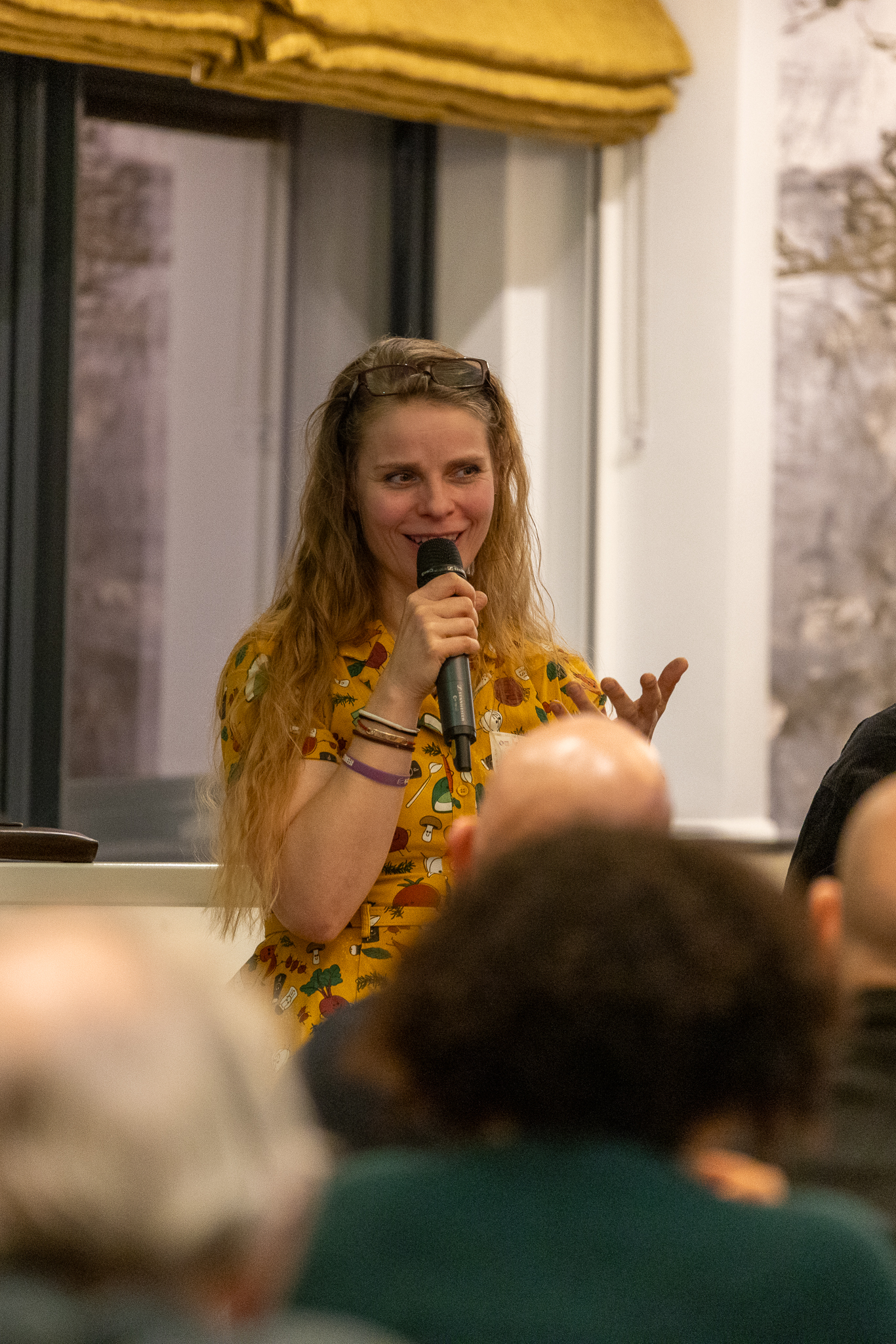 Andrea Zick, Doctoral Researcher and report co-author, said
“This report is a way of giving back. Chefs shared their experiences, pressures and hopes throughout my research, it’s only right the findings return to them in a form they can use.”
 Amy Fetzer, report co-author added
“Chefs have enormous potential to cut emissions, but the system needs to give them permission, practical tools and data that makes sense in real kitchens.”
A Report Grounded in Real‑world Kitchens
Based on five interlinked studies, spanning literature reviews, 23 industry interviews, participatory action workshops (PALAR), and 52 weeks of food‑waste and procurement‑emissions tracking, the report identifies SME chefs as powerful, yet overlooked agents of food‑system change.
Its findings show:
- Ingredients, not energy, drive the majority of emissions in hospitality.
- Chefs can meaningfully cut emissions through recipe reformulation, reduced waste, seasonal menus and plant‑rich dishes.
- SMEs are operating “blind” without integrated waste and emission data, despite accessible tools such as WRAP’s calculators.
- Chefs learn best on their feet, favouring active, hands‑on, bitesize learning formats over classroom training.
- Participatory Action Learning (PALAR) and Theory U methods help teams reflect, prototype ideas and iterate improvements.
- Power dynamics matter: chefs need agency, time, and leadership support to drive change.
At the launch, guests echoed these findings.
 “Chefs want to do the right thing, they just need tools, permission and training that fits the way real kitchens work.” (Mecca Ibrahim, Women in the Food Industry)
“This work reassures us that the effort going into plant‑centric curricula and waste‑reduction bootcamps is not only valid but essential.” (Vince Kelly, Capital City College)
A catalyst for education and curriculum design
Educators at the event noted how strongly the findings align with the work underway at NHS England, Culinary Medicine UK CIC, and Capital City College Group. The report will be incorporated into the Healthy Plate, Healthy Planet curriculum development and will guide live skills bootcamps at Westminster Kingsway College, particularly modules on:
- Plant‑forward menu design
- Waste reduction
- Interpreting food‑emissions data
- Empowering chefs as system‑level change agents
A highlight of the evening was seeing Kyla Bertrand, a Westminster Kingsway chef alumnus and now culinary lecturer at West London College, speak on the panel, a testament to the report’s commitment to supporting the next generation of sustainability-driven kitchen professionals.
Why the Report Matters Now
 The hospitality sector faces mounting pressure to respond to the climate crisis, yet SMEs, which make up 99% of UK hospitality businesses, remain under-researched and underserved.
The report stresses:
- Menu design is one of the biggest levers for carbon reduction, more impactful than switching lightbulbs or packaging changes.
- Small, smart operational shifts can deliver significant carbon and cost savings.
- Chefs are ready for this challenge, but need time, data, power and support from owners, managers and procurement teams.
- A menu is an operational policy, a shared agreement across a business, not just a list of dishes.
- Carbon labels spark productive conversations, even when used in simple, indicative ways (e.g., “cheese is generally high impact”).
- Language matters: describing dishes as “rich”, “hearty”, or “bright” is more effective than leading with “vegan”.
“Chefs are often described as the beating heart of hospitality, but they are also powerful agents of food‑system change.”
 Event Reflections: Community, Collaboration and Momentum
Guests described the evening as “reassuring”, “energising”, and “a reminder of why this work matters.”
Dr Andrea Zick, Co-Author
Attendees appreciated the clarity of the report’s recommendations, particularly its “Big Five” enablers.
- Align sustainability with business owners
- Integrate data in user‑friendly ways
- Unlock chef agency
- Iterate, test, and learn
- Create spaces for reflection and experimentation
Many spoke of feeling motivated to deepen partnerships across education, industry and research, with one guest noting the importance of “working together across the food system, not in silos.”
Download the Report
The full report, including tools, templates and practical guidance for SMEs, is freely available here: Toolkit for SME chefs
Photography & Film by Carlos Farinha @carlosclickuk