Chef of the Week Sponsored by Pure Ionic Water: Kingsley Grant, Head Chef at Formby Hall
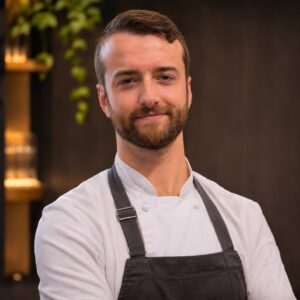
 Chef of the Week sponsored by Pure Ionic Water celebrates the chefs that embody Pure Ionic Water’s core philosophy of ‘enhancing the culinary experience‘.
Pure Ionic Water works in many kitchens up and down the country from the pinnacle of Michelin stars to 5-star hotels, uniting them all, the desire to serve the very best. Understanding the difference premium hydrogen enhanced alkaline water makes to food, to the kitchen team’s performance and ultimately to the business’s profits is easy, just ask around.
“I only trust Pure Ionic Water at home and in my restaurant.”
Sat Bains, Chef Parton, Restaurant Sat Bains, 2 Michelin stars
For more information about Pure Ionic Water CLICK HERE
How long have you worked at your current restaurant?
I joined Formby Hall Golf Resort & Spa in August 2026 as Head Chef.
Since joining, my focus has been on developing the food offering, improving kitchen operations and maintaining consistently high standards across the resort’s dining experiences.
Where did your passion for cooking come from and where did you learn your skills?
My passion for cooking developed through working in professional kitchens and discovering the creativity, discipline and precision that the industry demands. I’ve developed my skills through hands-on experience, learning from talented chefs and continually pushing myself to improve. I’ve always been particularly interested in classical techniques and how they can be used to create modern, innovative dishes.
What do you enjoy most about being a chef?
The creativity and the constant opportunity to improve. There’s something incredibly rewarding about taking simple ingredients and transforming them into something memorable. I also enjoy developing other chefs, building strong teams and seeing the results of everyone’s hard work come together during service.
Name three ingredients you couldn’t cook without.
Butter, salt and fresh herbs. Butter brings richness and depth, salt is fundamental to enhancing flavour, and fresh herbs provide freshness and balance. They’re simple ingredients, but they can completely transform a dish when used correctly.
Which piece of kitchen equipment couldn’t you live without?
My Thermomix. It’s incredibly versatile and allows for precision and consistency, particularly when producing veloutés, purées, emulsions and sauces. It’s an invaluable piece of equipment in a modern professional kitchen.
What food trends are you spotting at the moment?
There’s a noticeable shift towards ingredient-led cooking, sustainability and allowing vegetables to take centre stage rather than simply being an accompaniment. I’m also seeing more emphasis on refined simplicity, where chefs focus on exceptional produce, flavour and technique rather than unnecessarily complicated presentations.
What do you think is a common mistake that lets chefs down?
I think overcomplicating dishes is a common mistake. Chefs can become too focused on showcasing techniques rather than letting the ingredients and flavours speak for themselves. I also feel resilience is becoming an issue among some younger chefs. Professional kitchens demand discipline, consistency and the ability to handle pressure and constructive criticism. Talent is important, but without resilience, a strong work ethic and a willingness to learn, it’s difficult to progress in this industry.
What is your favourite time of year for food, and why?
Autumn, without a doubt. It’s a fantastic season for cooking, with ingredients such as wild mushrooms, squash, game and root vegetables. I particularly enjoy the deeper, richer flavours and the opportunity to create comforting dishes with a refined, modern presentation.
Which of your dishes are you most proud of?
My monkfish ballotine with prawn, Thai basil and lime mousse, served with butternut squash velouté, tomato foam and crispy basil. It’s a dish that represents my approach to cooking, combining classical techniques with modern flavours, contrasting textures and carefully considered presentation. Every component has a purpose, and the balance of flavours is what makes the dish work.
How do you come up with new dishes?
I usually start with a seasonal ingredient or a flavour combination that interests me and build the dish around it. I think about how different flavours, textures and techniques will complement one another, then develop and refine the dish through testing and tasting. For me, every element on the plate needs to contribute something. If it doesn’t improve the overall dish, it doesn’t belong there.
Who was your greatest influence?
Thomas Keller has been one of my greatest culinary influences. His philosophy of precision, discipline and respect for ingredients has always resonated with me. The French Laundry Cookbook was the first cookbook I ever bought, and it introduced me to a level of detail and technical excellence that has continued to influence my approach to cooking throughout my career.
Tell us three chefs you admire.
Adam Byatt, Clare Smyth and Thomas Keller.
Adam Byatt for his refined approach to modern British cuisine and his respect for classical cooking. Clare Smyth for her exceptional precision, creativity and ability to elevate ingredients into extraordinary dishes. Thomas Keller for his uncompromising standards, attention to detail and dedication to perfection.
All three represent the discipline, creativity and consistency that I believe define exceptional cooking.
What is your favourite cookbook?
The French Laundry Cookbook by Thomas Keller. It was actually the first cookbook I ever bought, so it holds particular significance for me. It introduced me to a completely different level of precision, technique and attention to detail. Even now, I admire Keller’s philosophy of respecting ingredients, mastering the fundamentals and constantly striving to improve. It’s a book that has stayed with me throughout my career.
Who do you think are the chefs to watch over the next few months?
I think the next generation of British chefs championing seasonal produce, sustainability and modern interpretations of classical cooking are particularly exciting. I’m especially interested in chefs who are developing their own culinary identity rather than simply following trends. For me, the chefs worth watching are those who put flavour, consistency and originality at the forefront of everything they do.
What’s been your favourite new restaurant opening of the last year?
Rosina is a recent opening that has particularly caught my attention. I haven’t had the opportunity to visit yet, but it’s definitely somewhere I’m interested in experiencing. I always enjoy seeing new restaurants emerge with their own identity and approach to hospitality, and I’m looking forward to seeing what Rosina brings to the dining scene.
What are your social media handles?
Instagram: @chef_kingsley20
Which of the Pure Ionic Water benefits are most attractive to you if you won & why?
Better dough and batter – YES
Consistency is essential in professional kitchens, particularly when working with recipes that rely on precise hydration. I’d be interested in seeing whether improved water quality could produce more consistent results.
Food tastes better – YES
Flavour is always my priority. Water plays an important role in cooking, and I’d be interested in exploring whether the system could make a noticeable difference to the finished product.
Reduced scaling and residue – YES
This is one of the most attractive benefits from an operational perspective. Reducing limescale build-up could help protect kitchen equipment, minimise maintenance requirements and improve efficiency.
No contaminants – YES
Water quality and food safety are important in any professional kitchen.
I’d welcome improved filtration and the potential reduction of unwanted contaminants, subject to the system’s verified performance.
No amending recipes for water – YES
Consistency across recipes is extremely important, particularly in a busy kitchen. Anything that helps maintain reliable results without constant adjustments would be beneficial.
Your KPs are more attentive – NO
Keeping the kitchen team properly hydrated is important for their wellbeing, particularly during long and demanding services. However, I would want to see reliable evidence before attributing improvements in concentration or attentiveness to a particular water system.
Overall, the benefits that appeal to me most are improved cooking consistency, water quality and reduced limescale. In a professional kitchen, anything that can support consistent food standards while improving operational efficiency is worth considering.