Chef of the Week Sponsored by Pure Ionic Water: Kamaldeep Singh, Head Chef at The Royal Horseguards Hotel
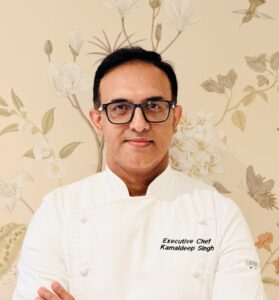
 Chef of the Week sponsored by Pure Ionic Water celebrates the chefs that embody Pure Ionic Water’s core philosophy of ‘enhancing the culinary experience‘.
Pure Ionic Water works in many kitchens up and down the country from the pinnacle of Michelin stars to 5-star hotels, uniting them all, the desire to serve the very best. Understanding the difference premium hydrogen enhanced alkaline water makes to food, to the kitchen team’s performance and ultimately to the business’s profits is easy, just ask around.
“I only trust Pure Ionic Water at home and in my restaurant.”
Sat Bains, Chef Parton, Restaurant Sat Bains, 2 Michelin stars
For more information about Pure Ionic Water CLICK HERE
How long have you worked at your current restaurant?
I have been with The Royal Horseguards Hotel and 1212 Restaurant for four years, leading the culinary operation and overseeing the food offering.
It has been a hugely rewarding four years. I have had the opportunity to develop our culinary identity, build and mentor a strong kitchen team, and continue to evolve our menus around seasonality, sustainability and the incredible quality of produce available from British farmers and local suppliers.
Being selected as Chef of the Week again is a real honour. It is a wonderful opportunity to showcase 1212 Restaurant, The Royal Horseguards and the team behind our culinary offering to a wider audience.
Where did your passion for cooking come from and where did you learn your skills?
My passion for cooking came from a genuine fascination with food and the discipline and creativity that professional kitchens demand.
Over the years, I have had the privilege of working in some fantastic kitchens and hospitality groups, including The Savoy, Marriott Hotels, Hilton Hotels and the Taj Group. Each environment taught me something different—from classical foundations and precision to large-scale operations, leadership, consistency and, most importantly, the importance of delivering an exceptional guest experience.
I have always believed that a chef never stops learning. Every kitchen, chef, supplier, farmer, ingredient and service gives you an opportunity to improve.
What do you enjoy most about being a chef?
For me, it is the combination of creativity, ingredients and people.
There is something very rewarding about taking a beautiful seasonal ingredient, understanding it, respecting it and turning it into something memorable for a guest.
I also really enjoy the leadership side of the role. Developing young chefs, passing on knowledge and watching a team grow in confidence is incredibly satisfying. Ultimately, when the kitchen and front of house work together and you see a guest genuinely enjoying their experience, that is what makes being a chef so rewarding.
Name three ingredients you couldn’t cook without.
Excellent seasonal produce, quality olive oil and a great stock.
For me, these represent the foundations of good cooking: exceptional ingredients, good-quality fats and properly developed flavour.
Which piece of kitchen equipment couldn’t you live without?
My chef’s knife.
It is still the most important tool in my kitchen. A good knife gives you precision, consistency and control, and although kitchens are becoming increasingly sophisticated, nothing replaces strong fundamentals and good knife skills.
What food trends are you spotting at the moment?
I think we are seeing a very positive movement towards produce-led, seasonal and sustainable cooking.
Guests are increasingly interested in provenance—where their food comes from, how it has been produced and the story behind the ingredients.
I am also seeing vegetables being given a much more prominent role, alongside fermentation, preservation, responsible nose-to-tail and root-to-stem cooking, and a renewed appreciation for classical techniques.
For me, the most exciting thing is that sustainability is becoming part of the way chefs think about food rather than simply being a trend.
What do you think is a common mistake that lets chefs down?
Overcomplication.
As chefs, we have access to so many ingredients, techniques and technologies that it can be tempting to put too much on a plate.
For me, great cooking is about knowing when to stop. If you have an exceptional seasonal ingredient, you should respect it and allow it to shine rather than disguise it.
Consistency is equally important. A great dish is only truly successful if you can deliver it to the same high standard, service after service.
What is your favourite time of year for food, and why?
Autumn.
It is one of the most exciting seasons for a chef because of the incredible range of British produce available—game, mushrooms, pumpkins, brassicas, root vegetables, apples, pears and so much more.
The season naturally lends itself to deeper flavours, roasting, braising and slow cooking, but there is still enormous scope for creativity. It is also a wonderful time to showcase the relationships we have built with our local farmers and suppliers.
Which of your dishes are you most proud of?
Two dishes that I am particularly proud of at 1212 are our pan-seared scallops and tiger prawns with pineapple carpaccio and ginger-soy dressing, and our free-range Surrey Tamworth pork belly with hispi cabbage, celeriac purée, glazed apple, wholegrain mustard sauce and crisp crackling.
The scallop and prawn dish is all about freshness and balance. The delicate sweetness of the pan-seared scallops and tiger prawns works beautifully with the bright, tropical acidity of pineapple, while the ginger-soy dressing brings warmth, savouriness and depth. It is a dish that is vibrant, elegant and light, while allowing the seafood to remain the star.
The pork dish is particularly special because of the provenance behind the ingredient. We use free-range Tamworth pork from local Surrey farms. The sows and growing pigs are kept in social groups in deeply strawed tented lodges, with free access to roam, feed, sleep or wallow naturally. The lodges provide a comfortable environment throughout the seasons and are situated within large paddock areas.
How do you come up with new dishes?
Knowing the story behind the ingredient is an important part of modern cooking for me. We then treat that beautiful pork with the respect it deserves, pairing the richness of the belly with the freshness of hispi cabbage, the earthy silkiness of celeriac, the natural sweetness of glazed apple and the gentle acidity and warmth of wholegrain mustard. Finished with crisp, golden crackling, the dish is all about contrast—richness, acidity, sweetness and texture.
Both dishes reflect the style of food I want to create at 1212: seasonal, produce-led cooking, strong provenance and thoughtful combinations that allow the quality of the ingredient to remain at the heart of the dish.
Who was your greatest influence?
One of my greatest influences is Ferran Adrià of elBulli.
What I admire about Ferran is his ability to challenge conventional thinking about food and creativity. He demonstrated that a chef can look at an ingredient or a familiar culinary idea from a completely different perspective.
His approach encouraged the industry to think differently about creativity, technique and the overall dining experience. That spirit of curiosity is something I carry with me in my own cooking.
Tell us three chefs you admire.
Three chefs I particularly admire are Heston Blumenthal, Gordon Ramsay and Thomas Kellar.
They are very different chefs, but each has made a significant impact on the industry.
I admire Heston for his creativity and intellectual approach to food, Gordon for his extraordinary standards, discipline and drive, and Ferran for completely redefining what chefs could achieve through creativity and innovation.
What is your favourite cookbook?
Two books that I always come back to are Le Répertoire de la Cuisine and Modernist Cuisine.
They represent two very different sides of cooking, which I find fascinating.
Le Répertoire de la Cuisine is an incredible reference for classical technique and culinary foundations, while Modernist Cuisine explores science, technology and the possibilities of modern cooking.
For me, having a strong understanding of the classics gives you the foundation to innovate.
Who do you think are the chefs to watch over the next few months?
I think there is an incredibly exciting generation of chefs coming through in London and across the UK.
I am particularly interested in chefs who are developing a genuine culinary identity while combining seasonality, sustainability, British produce and strong technical foundations.
I think the future of hospitality will belong to chefs who can be creative while also being responsible—using produce intelligently, reducing waste, supporting farmers and building restaurants with a strong sense of purpose.
My top three would be Jacob Farley, Karla Knowles and Joe Fox, as their approaches align especially well with your emphasis on seasonality, produce-led cooking and culinary identity.
What’s been your favourite new restaurant opening of the last year?
Lucky Cat at 22 Bishopsgate has been one of my favourite recent London openings.
I enjoyed the energy of the restaurant and the way it approaches its food and dining experience. It is always exciting to see a new concept arrive in London with the ambition to create something distinctive.
As a chef, I enjoy visiting restaurants that have a clear identity and give you something to think about, whether that is the food, the service, the design or the overall guest experience.
What are your social media handles?
Instagram: Chef Kamaldeep
LinkedIn: Kamaldeep Singh
Which of the Pure Ionic Water benefits are most attractive to you if you won & why?
For me, several of the benefits are particularly attractive:
- Better dough and batter — YES
- Food tastes better — YES
- Reduced scaling & residue — YES
- No contaminants — YES
- No amending recipes for water — YES
- Your KPs are more attentive — YES
From a professional kitchen perspective, I particularly value consistency and water quality.
Water is an important ingredient across a professional kitchen. It is used in stocks, sauces, doughs, batters, cooking and beverages, so having consistent water quality can have an impact across many areas of the operation.
The hydration aspect for the kitchen team is also important. Professional kitchens are physically and mentally demanding environments, particularly during long services. Keeping the team properly hydrated helps support concentration, energy and performance.
For me, anything that can contribute to better ingredients, greater consistency and a healthier, more focused kitchen team is worth considering.