The Healthcare Chefs’ Knowledge 1 & 2 Are Now Available on Kindle: Must-have E-books for Every Healthcare Chef

The Chefs’ Forum is pleased to announce that The Healthcare Chefs’ Knowledge 1 and The Healthcare Chefs’ Knowledge 2: Eating The Rainbow are now available as Kindle e-books, offering NHS chefs and healthcare foodservice professionals immediate access to two crucial modern resources for hospital catering.
Both titles are filled with deliciously tasty, practical recipes that every healthcare chef needs to know, along with real insight into the people and partnerships shaping healthcare food; From chefs and catering teams to dietitians, sustainability leaders, educators, and NHS stakeholders.
Why Buy Book 1 Today?
Book 1 delivers an essential foundation for healthcare kitchens, featuring 100+ NHS-approved recipes and highlighting the latest developments in patient, staff and visitor catering across the NHS.
Click here to buy book 1
Why Buy Book 2 Today?
Book 2: Eating The Rainbow moves the sector forward with 100 carbon-conscious recipes, plus a strong focus on sustainability, healthier menu design, and the positive changes shaping modern hospital foodservice.
Click here to buy book 2
 As Philip Shelley, National Lead for Food at NHS England, explains:
“These two books cover everything healthcare chefs and stakeholders need to know about modern hospital food practices and the positive changes being implemented, with a particular focus on sustainability and creating healthy, nutritious menus. It will be a valuable resource for chefs and caterers to explore and learn from.”
More Great Bews: Book 3 is On Its Way – The Trilogy!
With Books 1 and 2 now available digitally, The Chefs’ Forum is already gaining momentum towards the next stage. A third Healthcare Chefs’ Knowledge book is currently being developed and is due for publication this autumn: The Healthcare Chefs’ Knowledge 3: Provenance & Seasonality. This publication will highlight British seasons, sustainable sourcing, and nutrient-led cooking in healthcare. For more information about any of the books in this series or to order a paperback version, email catherine@redcherry.uk.com
Chef of the Week Sponsored by Pure Ionic Water: Lee Cooper, Executive Chef at Hintlesham Hall in Ipswich
 Chef of the Week sponsored by Pure Ionic Water celebrates the chefs that embody Pure Ionic Water’s core philosophy of ‘enhancing the culinary experience‘.
Pure Ionic Water works in many kitchens up and down the country from the pinnacle of Michelin stars to 5-star hotels, uniting them all, the desire to serve the very best. Understanding the difference premium hydrogen enhanced alkaline water makes to food, to the kitchen team’s performance and ultimately to the business’s profits is easy, just ask around.
“I only trust Pure Ionic Water at home and in my restaurant.”
Sat Bains, Chef Parton, Restaurant Sat Bains, 2 Michelin stars
For more information about Pure Ionic Water CLICK HERE
How long have you worked at your current restaurant?
I have been at Hintlesham Hall for 2 months.
Where did your passion for cooking come from and where did you learn your skills?
My love of food was born from the age-old story, cooking and eating with family and making those memories that still exist in my food now. I developed my skills by working with inspirational and driven people and burying my head in books and food media.
What do you enjoy most about being a chef?
The ability to make people happy through the food they eat.
Name three ingredients you couldn’t cook without.
Salt, butter and passion.
Which piece of kitchen equipment couldn’t you live without?
It has to be my handmade chefs knives.
What food trends are you spotting at the moment?
- Global flavours and borderless cuisine.
- Honest and simply cooked food.
What do you think is a common mistake that lets chefs down?
Not looking after themselves.
What is your favourite time of year for food, and why?
Autumn is my favourite as it will always deliver the last of the summer produce and introduce the warming and flavourful dishes that cook lower and slower.
Which of your dishes are you most proud of?
Beef dripping potatoes layered like a Pommes Anna, they taste like the chips from when I was a kid.
How do you come up with new dishes?
I am influenced by nature, art and what is going on outside.
Who was your greatest influence?
My nana, she was an amazing cook and always pushed me in the early days of my career. Before we lost her, she was always pushing me to cook from the heart
Tell us three chefs you admire.
- Adam Handling – for the amazing work on food waste.
- Gordon Ramsay – an inspiration in my early career that inspired me to push harder and made me want to be a chef.
- Daniel Humm – the energy and drive to constantly reimagine and evolve.
What is your favourite cookbook?
White Heat, Marco is a legend.
Who do you think are the chefs to watch over the next few months?
- Glynn Purnell – has a new opening around the corner.
- Harry Askew – Following in his dads’ footsteps at Barnacle.
- Kirk Howarth – his Food and passion is amazing.
What’s been your favourite new restaurant opening of the last year?
Belotta – Bury St Edmunds – they are doing some seriously great work over there.
From Research to Real kitchens: New Low‑carbon Menus Report Empowers SME Chefs to Drive Food System Change
 The hospitality sector made a significant step towards climate-positive cooking this week, as chefs, educators, researchers, and industry leaders gathered at the University of West London for the launch of Low-Carbon Menus: Tools and Tactics to Empower SME Chefs, a new sector-facing report co-authored by Andrea Zick and Amy Fetzer, published as part of the UKRI Transforming the UK Food System Programme.
The launch event brought together changemaking leaders, shaping the future of sustainable gastronomy, along with the newly appointed Assistant Dean of the London Geller College for Hospitality and Tourism, Professor Ioannis S. Pantelidis. Attendees praised the report for bridging the gap between academic research, sustainability policy, and the real, everyday pressures faced by professional kitchens.
It was also a moment of celebration: colleagues across industry and academia congratulated the co-authors Amy Fetzer and Andrea Zick on the publication of the report based on four years of academic research — a body of work already influencing menus, training programmes, and chef education across the UK.
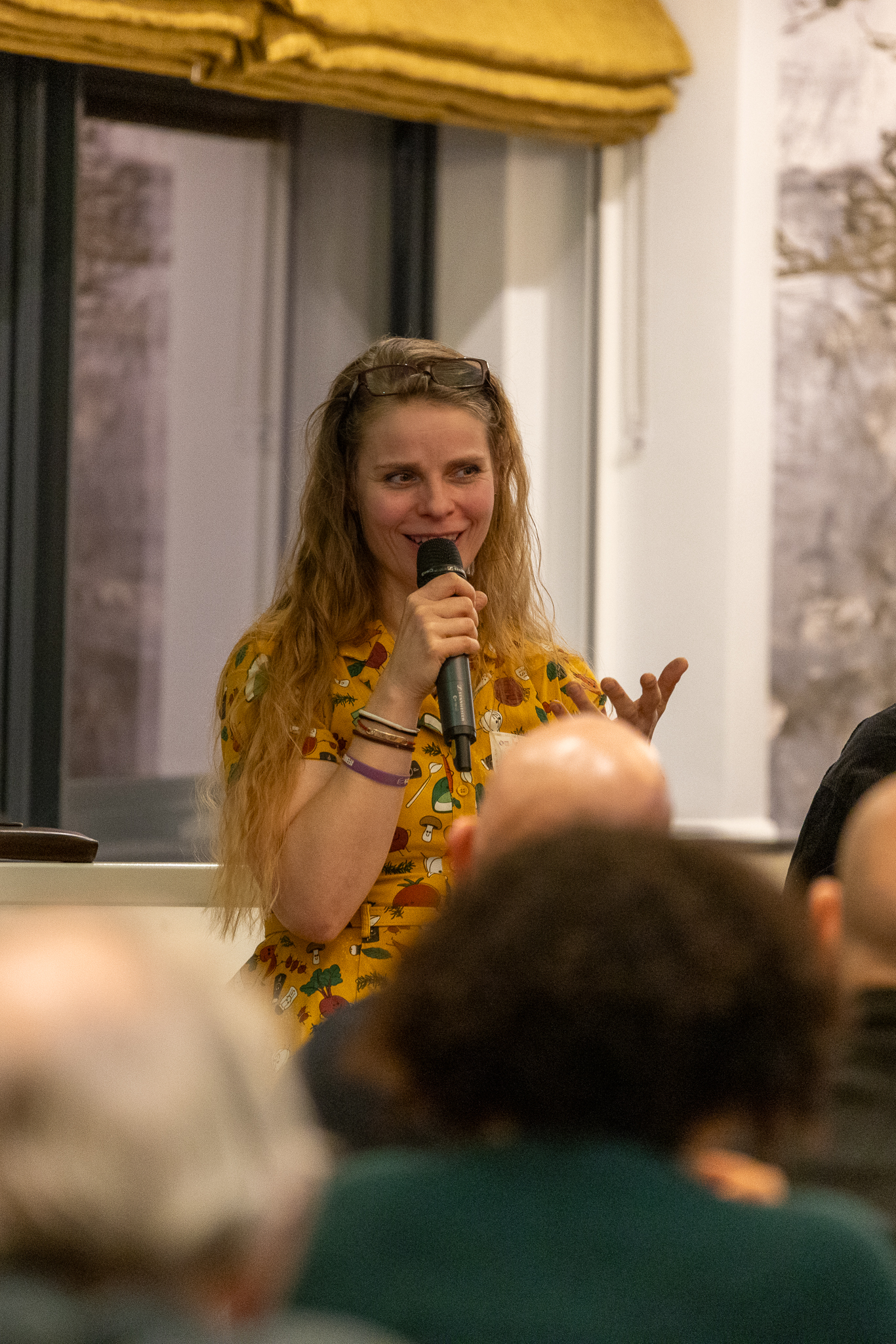 Andrea Zick, Doctoral Researcher and report co-author, said
“This report is a way of giving back. Chefs shared their experiences, pressures and hopes throughout my research, it’s only right the findings return to them in a form they can use.”
 Amy Fetzer, report co-author added
“Chefs have enormous potential to cut emissions, but the system needs to give them permission, practical tools and data that makes sense in real kitchens.”
A Report Grounded in Real‑world Kitchens
Based on five interlinked studies, spanning literature reviews, 23 industry interviews, participatory action workshops (PALAR), and 52 weeks of food‑waste and procurement‑emissions tracking, the report identifies SME chefs as powerful, yet overlooked agents of food‑system change.
Its findings show:
- Ingredients, not energy, drive the majority of emissions in hospitality.
- Chefs can meaningfully cut emissions through recipe reformulation, reduced waste, seasonal menus and plant‑rich dishes.
- SMEs are operating “blind” without integrated waste and emission data, despite accessible tools such as WRAP’s calculators.
- Chefs learn best on their feet, favouring active, hands‑on, bitesize learning formats over classroom training.
- Participatory Action Learning (PALAR) and Theory U methods help teams reflect, prototype ideas and iterate improvements.
- Power dynamics matter: chefs need agency, time, and leadership support to drive change.
At the launch, guests echoed these findings.
 “Chefs want to do the right thing, they just need tools, permission and training that fits the way real kitchens work.” (Mecca Ibrahim, Women in the Food Industry)
“This work reassures us that the effort going into plant‑centric curricula and waste‑reduction bootcamps is not only valid but essential.” (Vince Kelly, Capital City College)
A catalyst for education and curriculum design
Educators at the event noted how strongly the findings align with the work underway at NHS England, Culinary Medicine UK CIC, and Capital City College Group. The report will be incorporated into the Healthy Plate, Healthy Planet curriculum development and will guide live skills bootcamps at Westminster Kingsway College, particularly modules on:
- Plant‑forward menu design
- Waste reduction
- Interpreting food‑emissions data
- Empowering chefs as system‑level change agents
A highlight of the evening was seeing Kyla Bertrand, a Westminster Kingsway chef alumnus and now culinary lecturer at West London College, speak on the panel, a testament to the report’s commitment to supporting the next generation of sustainability-driven kitchen professionals.
Why the Report Matters Now
 The hospitality sector faces mounting pressure to respond to the climate crisis, yet SMEs, which make up 99% of UK hospitality businesses, remain under-researched and underserved.
The report stresses:
- Menu design is one of the biggest levers for carbon reduction, more impactful than switching lightbulbs or packaging changes.
- Small, smart operational shifts can deliver significant carbon and cost savings.
- Chefs are ready for this challenge, but need time, data, power and support from owners, managers and procurement teams.
- A menu is an operational policy, a shared agreement across a business, not just a list of dishes.
- Carbon labels spark productive conversations, even when used in simple, indicative ways (e.g., “cheese is generally high impact”).
- Language matters: describing dishes as “rich”, “hearty”, or “bright” is more effective than leading with “vegan”.
“Chefs are often described as the beating heart of hospitality, but they are also powerful agents of food‑system change.”
 Event Reflections: Community, Collaboration and Momentum
Guests described the evening as “reassuring”, “energising”, and “a reminder of why this work matters.”
Dr Andrea Zick, Co-Author
Attendees appreciated the clarity of the report’s recommendations, particularly its “Big Five” enablers.
- Align sustainability with business owners
- Integrate data in user‑friendly ways
- Unlock chef agency
- Iterate, test, and learn
- Create spaces for reflection and experimentation
Many spoke of feeling motivated to deepen partnerships across education, industry and research, with one guest noting the importance of “working together across the food system, not in silos.”
Download the Report
The full report, including tools, templates and practical guidance for SMEs, is freely available here: Toolkit for SME chefs
Photography & Film by Carlos Farinha @carlosclickuk
Chef of the Week Sponsored by Pure Ionic Water: Anthony Wright, Executive Chef at ISS
Chef of the Week sponsored by Pure Ionic Water celebrates the chefs that embody Pure Ionic Water’s core philosophy of ‘enhancing the culinary experience‘.
Pure Ionic Water works in many kitchens up and down the country from the pinnacle of Michelin stars to 5-star hotels, uniting them all, the desire to serve the very best. Understanding the difference premium hydrogen enhanced alkaline water makes to food, to the kitchen team’s performance and ultimately to the business’s profits is easy, just ask around.
“I only trust Pure Ionic Water at home and in my restaurant.”
Sat Bains, Chef Parton, Restaurant Sat Bains, 2 Michelin stars
For more information about Pure Ionic Water CLICK HERE
How long have you worked at your current restaurant?
I have worked at ISS – Radbroke Barclays Centre since the beginning of 2026.
Where did your passion for cooking come from and where did you learn your skills?
From the age of 15, I loved my work experience in a 4-star hotel and decide to pursue a job. I went to Wigan & Leigh College and learnt from being on the job. Especially from working for Mark Prescott, ex Le Gavroche chef.
What do you enjoy most about being a chef?
I like the customer interaction and getting positive feedback, and even negative feedback too. You can take that honesty and make changes.
Name three ingredients you couldn’t cook without.
Butter, salt and truffle.
Which piece of kitchen equipment couldn’t you live without?
My Rational iCombi Pro.
What food trends are you spotting at the moment?
There are a lot of street food trends.
What do you think is a common mistake that lets chefs down?
Lack of training and understanding of ingredients.
What is your favourite time of year for food, and why?
I love autumn for venison and wild mushrooms, the hearty autumn flavours that pack a punch.
Which of your dishes are you most proud of?
My award-winning fish pie and my version of lemon meringue pie.
How do you come up with new dishes?
I look at what’s in season and available from my local suppliers.
Who was your greatest influence?
My greatest influences were the Roux Brothers, Marco and Gordan Ramsay – Gordon follows me on Twitter!
Tell us three chefs you admire.
Lisa Goodwin-Allen for delicate punch Lancashire food, Grant Achatz from Alinea for making dining an memorable experience, and Kirk Howarth for elevating vegan gastronomy.
What is your favourite cookbook?
Hard to just pick one!
Who do you think are the chefs to watch over the next few months?
Tim Allen at Solo and Mark Poynton at The Shepherds.
What’s been your favourite new restaurant opening of the last year?
Restaurant Gordan Ramsay High.
Pure Performance: Pure Ionic Water Sponsors Team Monaco on Their E1 World Championship Journey
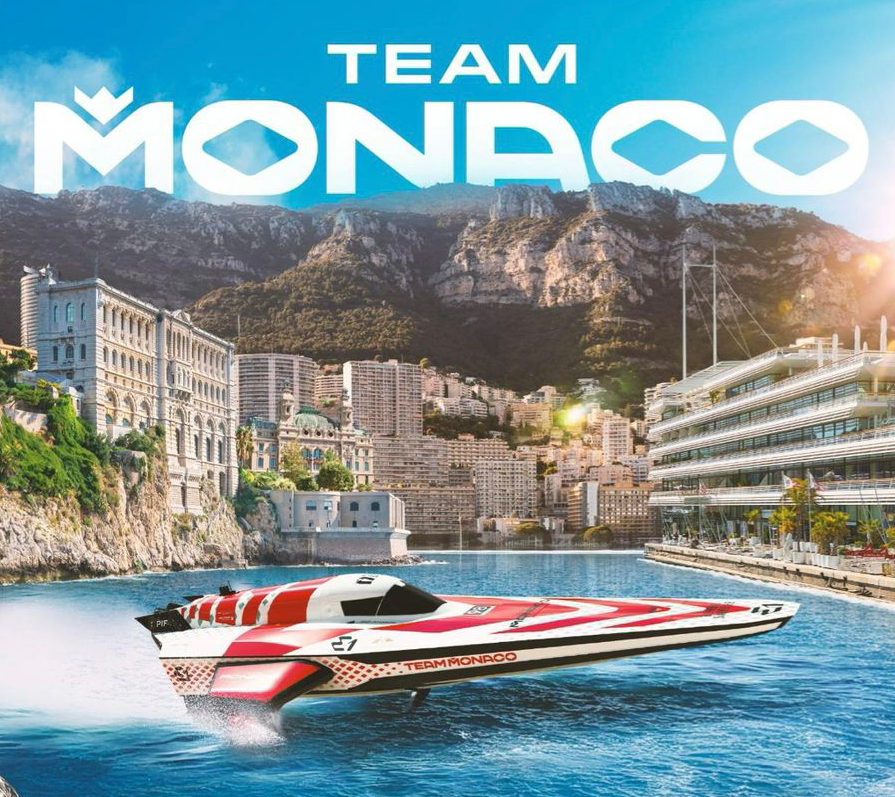 As environmental elite sport continues to develop, the difference between winning and losing is increasingly determined not just by technology and talent, but also by wellbeing, focus, and sustainability. That philosophy lies at the core of an exciting partnership, as our Chef of the Week Headliners, Pure Ionic Water, proudly sponsor Team Monaco, helping the team stay properly hydrated as they prepare for their debut season in the UIM E1 World Championship.
Michael Adams, Founder and CEO of Pure Ionic Water said:
“We are incredibly proud to sponsor a truly world-class championship that sits at the intersection of elite performance and sustainability. At the highest level of sport, even mild dehydration can impair concentration, reaction time, and physical endurance, margins that simply don’t exist in electric powerboat racing. When pilots navigate tight, technical circuits at speed, mental clarity and hydration are vital performance factors. Pure Ionic Water provides exceptionally pure, hydrogen-enriched water that supports faster cellular absorption and optimal electrolyte balance, helping pilots stay focused, resilient, and race-ready under intense physical and mental demands. Supporting Team Monaco and the E1 World Championship is a natural extension of our commitment to purity, health, performance, and environmental responsibility.”
Cutting-edge Technology
For a championship defined by cutting-edge electric technology and sustainability, hydration is not a peripheral concern, it is a performance-critical component.

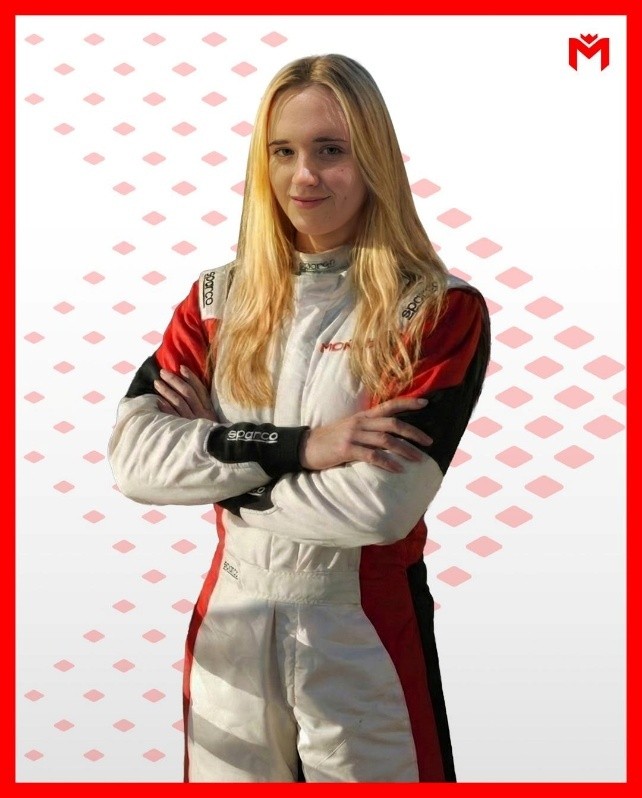 For Team Monaco pilots Oban Duncan and Maxime Nocher, staying hydrated is not simply about quenching thirst. It is about sustaining focus lap after lap, maintaining decision-making accuracy under pressure, and supporting recovery between sessions in demanding climates such as Jeddah.
Purity, Health and Performance in One
Beyond performance, Pure Ionic Water is recognised for its broader health benefits. Its advanced filtration removes contaminants while maintaining the clean, crisp taste that encourages regular consumption, an often-overlooked aspect of effective hydration strategies. Consistent intake supports digestion, circulation, joint health, and overall wellbeing, all of which enhance resilience during a long and physically demanding race calendar.
For chefs, hospitality professionals and foodservice leaders within The Chefs’ Forum community, the parallels are clear. Long, busy services, high-pressure environments and the need for sustained concentration mirror the demands placed on these elite athletes. Hydration, like nutrition, is foundational to performance, whether on the water or in the kitchen.
 Sustainability at the Core
What makes this partnership particularly compelling is its shared sustainability ethos. Team Monaco races under the patronage of the Prince Albert II Foundation, championing clean technology and environmental stewardship. Pure Ionic Water aligns seamlessly with this mission. Dispensed through premium systems into branded reusable water bottles designed to eliminate single-use plastic, Pure Ionic Water eliminates landfill waste while delivering exceptional water quality. Its innovative filtration and softening technology operates without power and creates no wastewater, lowering both environmental impact and operational cost.
This approach reflects a wider shift within hospitality and sport alike: performance solutions must also be responsible solutions. From electric race boats to sustainable water systems, innovation is being measured not just by speed or efficiency, but by long-term impact and achievement of net-zero objectives.
A Shared Vision of Excellence
As Team Monaco prepares to take their place on the global E1 stage, this sponsorship signifies more than just branding; it is a declaration of intent. It shows a commitment to sustainability while delivering excellence in purity, health, and performance.
For The Chefs’ Forum, our partnership with Pure Ionic Water serves as a timely reminder that excellence in any field is built on fundamental principles of purity, health, and performance carried out well; whether hydrating elite athletes or featured in leading professional kitchens as both a hydration source for brigades and as an ingredient, the core ideas remain the same.
 Pure Ionic Water and Team Monaco demonstrate that when performance meets purpose, and like The Monaco Yacht Show, becomes another celebration of their support for The Principality of Monaco.
For more information on Pure Ionic Water and its focus on purity, health and performance, and how it can benefit your team and kitchen, visit www.pureionicwater.com or email: lucy.lilley@wet-environmentals.com
Chef of the Week Sponsored by Pure Ionic Water: Olivier Certain, Head Chef at The Little Wine Shop & Social in Taunton
Chef of the Week sponsored by Pure Ionic Water celebrates the chefs that embody Pure Ionic Water’s core philosophy of ‘enhancing the culinary experience‘.
Pure Ionic Water works in many kitchens up and down the country from the pinnacle of Michelin stars to 5-star hotels, uniting them all, the desire to serve the very best. Understanding the difference premium hydrogen enhanced alkaline water makes to food, to the kitchen team’s performance and ultimately to the business’s profits is easy, just ask around.
“I only trust Pure Ionic Water at home and in my restaurant.”
Sat Bains, Chef Parton, Restaurant Sat Bains, 2 Michelin stars
For more information about Pure Ionic Water CLICK HERE
How long have you worked at your current restaurant?
I started working at The Little Wine Shop in Taunton 6 months ago.
Where did your passion for cooking come from and where did you learn your skills?
I know it’s a bit cliché, but I always wanted to cook, and from a young age I was very lucky to visit lots of different chefs in various countries where my dad was working. I always was intrigued by the buzz in the kitchen, the brigade system and the food coming out from these establishments.
What do you enjoy most about being a chef?
It’s really rewarding being a chef as it’s amazing when diners celebrate their anniversary, birthday or any other occasion and their meal is a big part of their celebration. They put a lot of trust in you when they choose to eat your food for their special occasion. I also love the camaraderie of chefs and other people working in hospitality, unless you’ve been deep in the trenches on a hard shift, there is no other feeling like it.
Name three ingredients you couldn’t cook without.
- Salt – without it most food would be a bit bland, a good salt can elevate a dish.
- Olive oil – there are some amazing olive oils out there which really finish a dish.
- Garlic – it goes in almost everything I cook! (besides desserts…ha)
Which piece of kitchen equipment couldn’t you live without?
My trusty Thermomix. I love it and I use it all the time. A special mention would have to go to my Kitchen Aid, which I have had for 15 years, and it’s never let me down… yet. Finally, my hand blender, Bamix which I use all the time.
What food trends are you spotting now?
I think lots of chefs are going back to cook simpler food, done well, classic dishes using every part of the ingredients and less waste. There is a real cost of living crisis happening, so food needs to be affordable, and chefs need to make sure that nothing goes to waste.
What do you think is a common mistake that lets chefs down?
Overcomplicating dishes with too many combinations. Using too many pretty flowers or micro herbs won’t make the dish better. I agree on using micro herbs, as I use them, but they can ruin a dish if not knowing the flavours. Everything has its place. Pea shoots shouldn’t be used all year round; it’s about knowing what’s in season and using it correctly.
What is your favourite time of year for food, and why?
I love to cook every season of the year as new ingredients comes in season so we can change dishes. However, spring is my favourite – lighter dishes, fresh ingredients after the heavy, hearty winter dishes.
Which of your dishes are you most proud of?
I am proud of a lot of dishes I have done but I can do a very decent fish soup and bouillabaisse. I love cooking with fish; it’s a real passion of mine.
How do you come up with new dishes?
Usually with the seasons and the produces, it drives my menu choices. I do read a lot of cook books and follow a lot of chefs as it does inspire to cook different things.
Who was your greatest influence?
Jany Gleizes from La Bonne Etape in Chateau Arnoux France. I did work there after my college years and it opened my eyes on how proper restaurants should be run.
Tell us three chefs you admire.
- Rick Stein – his knowledge of fish cookery is immense.
- Gerald Passeda in Marseille, France – another chef whose menu is heavily fish oriented.
- Anthony Bourdain, who passed away in 2018.
What is your favourite cookbook?
- Le Larousse Gastronomique – I always use it.
- Ripailles by Stephane Reynaud.
- The Square Cookbook (both) by Philip Howard.
Who do you think are the chefs to watch over the next few months?
There’s a lot of talent out there recently but Scott Paton is doing extraordinary things lately at Acleaf Restaurant and Merlin Johnson at Osip in Bruton.
What’s been your favourite new restaurant opening of the last year?
Fowlescombe Farm with Elly Wentworth.
Celebrating 2025: Seven Years of Culinary Excellence at West London College
 As 2025 draws to a close, we are proud to celebrate the successful conclusion of another incredible year for The Chefs’ Forum Academy at West London College. Now in its seventh year of partnership, the academy continues to bridge the gap between education and the professional kitchen, providing students with unparalleled access to industry leaders.
 Throughout the year, students have been inspired by a series of high-impact masterclasses delivered by some of the most respected names in the hospitality world.
2025 Masterclass Highlights (to name just a few!):
- Level 2 Fish & National Seafood Competition Prep with Craig Johnston, Head Chef at the Michelin-starred The Angler, Roux Scholar, and MasterChef: The Professionals winner.
- Level 2 Meat Boning-Out delivered by Tom Cook, Head Chef at Smith & Wollensky.
- Mystery Box ‘MasterChef’ Challenge: An intense, creative session evaluated by an elite panel of guest judges:
- Geanina Rugina, Executive Chef at Louie London
- Jason Howard, Renowned Chef Consultant

- Chanaka Fernando, Global Executive Chef at Buddha Bar
- Sean Simmonds, Culinary Director at Graysons
- Level 3 Game Dish with Santhosh Ravimony, Executive Chef at The Tower Hotel London.
- Level 1 Poached Fish with Mattia Ricci, Executive Chef at Sexy Fish.
- Level 3 Pastry Excellence: An inspiring session with current Student Pastry Chef of the Year, Phoebe Mortimer, who has since joined the world-class team at The Dorchester.
- Industry Insight: An exclusive site visit to the Royal Garden Hotel, giving students a behind-the-scenes look at a major luxury hotel operation.
A Festive Finale
 To wrap up the year on a high note, students enjoyed a festive pastry masterclass led by International Pastry Consultant Franciane Tartari. Bringing her vast experience to the colleges Level 2 students, Franciane delivered an immersive masterclass on the traditional Stollen, blending technical precision with holiday spirit.
It served as a perfect summary of the year’s objectives: combining traditional heritage with the modern, exacting standards of the hospitality industry.
This seventh year of partnership has once again proven that by bringing the industry into the classroom, we can inspire the next generation of culinary talent to reach new heights.
Chef of the Week: Clyde Wernli, Co-Founder of Dill ‘n Pickle in Dorset
How long have you worked at your current restaurant?
I’m the co-founder and chef of Dill ’n Pickle, a private-chef and catering company based in Bournemouth and Dorset. I run the business alongside my wife who managers the front of house aspect. We launched the business in early 2024 and have been growing it ever since.
Where did your passion for cooking come from and where did you learn your skills?
Food runs deep in my family. My grandfather on my dad’s side was a chef, and my grandmother on my dad’s side loved cooking and made incredible food. My aunt also trained as a chef before spending some time working for Nestlé. With that kind of family influence, cooking has always been part of my DNA. I built my skills through a mix of private-chef work, hands-on experience, and constant self-driven learning.
What do you enjoy most about being a chef?
Seeing people pause mid-conversation because a dish has hit them perfectly. Those moments make everything worth it. I also love the creativity—building menus, telling stories through food, and creating experiences that stick with people.
Name three ingredients you couldn’t cook without.
Quality beef, fresh herbs, and pickles.
Which piece of kitchen equipment couldn’t you live without?
My cast-iron pan. It’s the truth-teller of the kitchen—if you know, you know.
What food trends are you spotting at the moment?
Refined comfort food, fire-focused cooking, and a resurgence of hyper-local produce. I’m also seeing a big rise in bold Mexican flavours and vibrant Asian cooking—two cuisines I love working with.
What do you think is a common mistake that lets chefs down?
Overcomplicating dishes. When too much is happening on the plate, the story gets lost. Simplicity, done with intention, always wins.
What is your favourite time of year for food, and why?
Late summer into early autumn. You get the peak of bright summer produce with the first wave of deeper, richer flavours. It’s the most inspiring time of year for creating new dishes.
Which of your dishes are you most proud of?
My short-rib lasagna from the Signature Italian Menu. It’s a twist on a classic that has become a bit of a signature for Dill ’n Pickle.
How do you come up with new dishes?
Usually from a feeling or a memory—something nostalgic or atmospheric. From there, I let one standout seasonal ingredient guide the rest.
Who was your greatest influence?
Chefs like Tommy Banks, Josh Niland, and Grant Achatz — all masters of technique, flavour, and storytelling through food.
Tell us three chefs you admire.
Grant Achatz, Yotam Ottolenghi, and Josh Niland.
What is your favourite cookbook?
I don’t really have a favourite cookbook… but I can confidently say at least none of mine have been “Jamie’d” yet. (All love, Jamie.)
Who do you think are the chefs to watch over the next few months?
The up-and-coming South Coast chefs working with sustainability and hyper-seasonal ingredients. There’s real talent emerging in Dorset.
What’s been your favourite new restaurant opening of the last year?
Any opening that champions seasonal, local ingredients cooked with honesty and restraint gets my vote — Dorset has had some brilliant ones recently.
If Not Now, Then Never – Andy Lennox Leads National VAT CUT Campaign
 Hospitality has spent years shouting into the void while costs soar, margins evaporate and Westminster looks the other way. We have done the meetings. We have sat through the roundtables. We have answered the consultations. We have written the letters, signed the petitions and endured the polite conversations that lead absolutely nowhere. Enough.
The ‘No Labour MP’ ban has cut through the noise like nothing this industry has ever achieved. One simple action. One clear message. One united front. Overnight, hospitality forced itself into the national conversation. That does not happen by chance, and it will not happen twice.
Petrol head-turned-Unionist, TV’s Jeremy Clarkson is the latest to endorse this viral campaign, adding Labour’s 400-plus MPs to the banned list at his pub near Burford in the Cotswolds.
“This is the moment” said Lennox, “Either we lean in now, together, or we let it pass and accept that nothing will change.”
“We need every pub, restaurant, café, takeaway, bar, hotel, and event space to participate. Even if all you do is put a sign in the window, take a photo, and share it. Social media will carry the message further. The reach is enormous. The pressure builds quickly. This is how you compel a government to come to the table.”
“This is not about party politics. It is about survival.”
“Our sector cannot endure another year of rising costs, increased taxes, shrinking margins, and empty promises. We cannot keep being perceived as an easy target by ministers who have never managed a business, never paid a staff, and never scrutinised a balance sheet.”
“If we don’t act together now, we will regret it. The opportunity is there. The country is watching. Labour MPs are rattled, and they should be. This is an industry that employs millions, bolsters local economies, and keeps high streets vibrant.”
What can chefs and restaurateurs do?
Stand up. Join in. Add your voice. Add your photo. Add your pressure. And if you cannot do that, then at the very least amplify the message, share it and tag someone in hospitality.
If not now, then never.
We must secure a VAT cut.
Discover the campaign at: www.thewonkytable.co.uk/currentcampaign
Chef of the Week: Gary Ashley, Chef Proprietor at Chef Gary in Southampton
How long have you worked at your current restaurant?
I have been working as a private chef for about 18 years, catering to a variety of clients.
Where did your passion for cooking come from and where did you learn your skills?
I’ve always loved working with food. My grandmother was an incredible home cook, and I learned about working with different ingredients and combining flavours from her at a young age. I honed my skills through formal training and by working in several top restaurants before transitioning to private chef work. Most of the dishes I cook now are stemmed from meals that I love to eat at home with my family.
What do you enjoy most about being a chef?
I love the personal connection and flexibility of being a private chef. I get to meet all my clients face to face and get to be part of special occasion. The personable aspect of private dining is equally as important to the food so it’s great to see people enjoying the experience in their own homes and getting immediate feedback at the table.
Name three ingredients you couldn’t cook without.
- Onion: They are important as they add depth of flavour to all savoury dishes. Also beautiful to eat on their own, whether roasted, pickled or fried.
- Lemon: Brings acidity and balance added last minute to many dishes, savoury and sweet.
- Pulses: Really versatile as a nutritious ingredient. I use a lot in plant-based cooking and they offer protein, fibre and texture to lots of dishes.
Which piece of kitchen equipment couldn’t you live without?
Probably my blender — it’s indispensable for making smooth soups and sauces.
What food trends are you spotting at the moment?
There’s a lot of interest in plant-based, locally sourced ingredients and creative use of fermented foods. Also cooking outdoors on coal or wood. I love being outside in the summer where we cater lots of BBQ style menus.
What do you think is a common mistake that lets chefs down?
A common mistake is neglecting to taste dishes fully. It’s really important to sit down at the table and enjoy your dish in its entirety rather than just a quick taste. The right seasoning is so important, including acidity, sweetness and umami.
What is your favourite time of year for food, and why?
As much as I love the summer, autumn is my favourite. The seasonal produce like squashes, game, and fresh herbs are incredibly inspiring, and there’s a cosiness to the hearty, warming food that fits the season perfectly.
Which of your dishes are you most proud of?
I love working with spices and have created many vegetarian dishes for various completions over the years. I am proud of all these dishes as plant-based food is often overlooked.
How do you come up with new dishes?
I draw inspiration from seasonal ingredients, client preferences, and global cuisines. I like to experiment with flavour pairings and textures in the kitchen. I often get ideas from conversations with clients about their favourite foods or by watching Great British Menu or Masterchef on tv.
Who was your greatest influence?
My greatest influence was my Grandmother. She made everything from scratch, which is still a top priority in my cooking today.
Tell us three chefs you admire.
- Michel Roux Jnr: for his mastery of French cuisine. I was very blessed to have met and cooked for him in my early years as a private chef.
- Yotam Ottolenghi: for his inventive, vegetable-driven cooking.
- René Redzepi: for his focus on local and seasonal foraging.
What is your favourite cookbook?
Impossible to pick a favourite!! I love Ricky Steins books, especially his Far Eastern Odyssey. Any book with traditional style cooking techniques, unique to past cultures is always inspiring.
Who do you think are the chefs to watch over the next few months?
I think Priya Krishna and her approach to plant-based Indian-inspired cuisine is exciting, and I also follow the work of Edouard Loubet for his innovative use of French and Mediterranean ingredients.
What’s been your favourite new restaurant opening of the last year?
I don’t get out to new restaurants as a private chef, but I like to keep an eye on the chefs from Great British Menu each year and where they work.